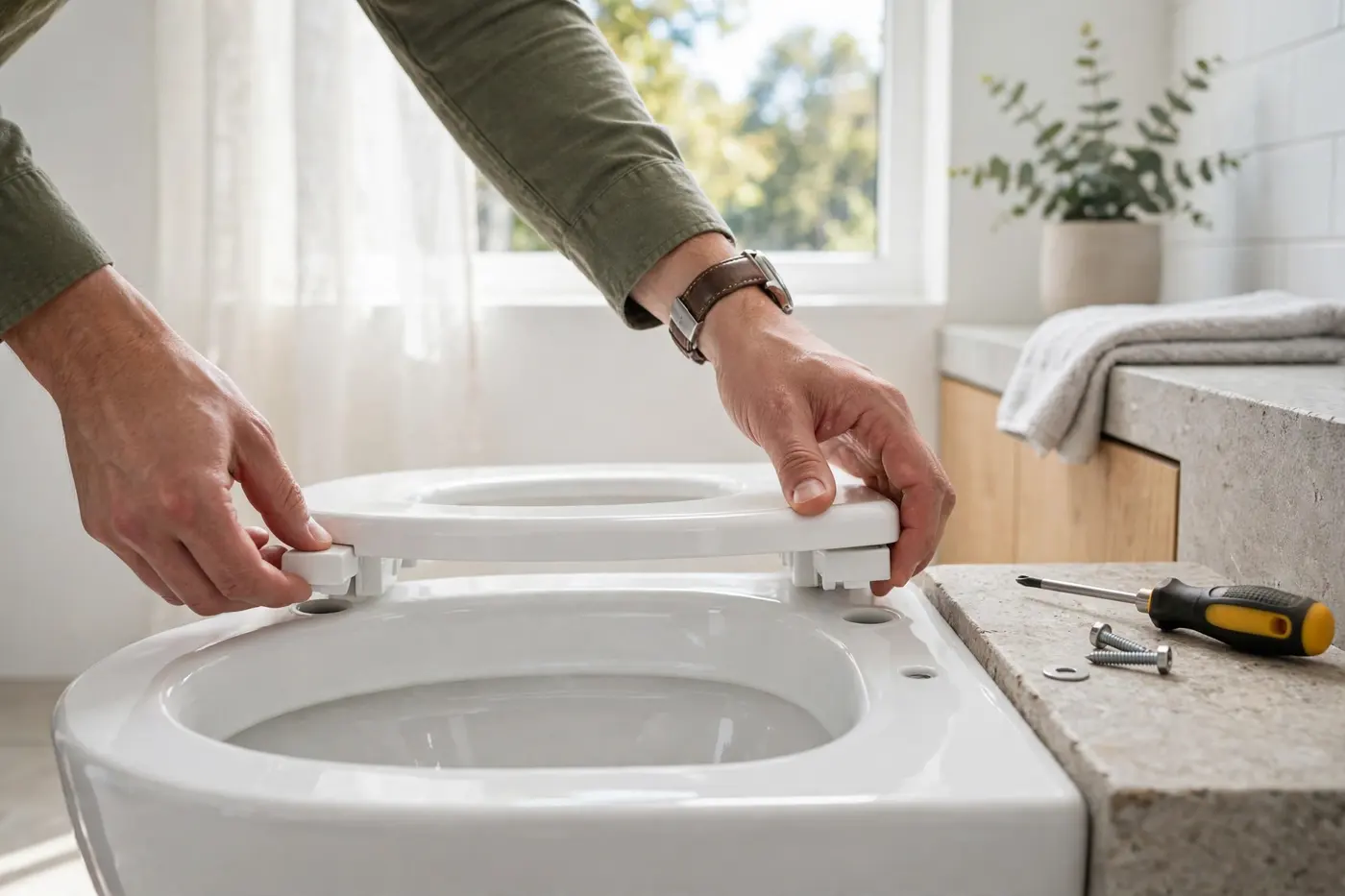
Toilet Seat Replacement in Fountain Valley, CA
A loose, cracked, or stained seat is fixed by measuring the bowl, matching the right shape, and fitting a secure new seat — one call connects you with a local toilet specialist.
📞 Call Now — (714) 410-0362Signs your toilet seat needs replacing, not just tightening
A seat gets daily use from every person in the home, so wear shows up in clear ways. Tightening the bolts helps for a short while, but some problems mean the seat itself has reached the end of its life.
Seat slides side to side
The ring shifts when you sit down, even after the bolts were tightened last month.
See the fix →Crack in the ring or lid
A visible split in wood, plastic, or enamel finish that pinches and keeps growing.
See the fix →Lid drops with a bang
Worn hinges no longer hold the lid, so it falls hard against the bowl every time.
See the fix →Stains that will not clean off
The finish is worn through, so marks soak in and the surface always looks dirty.
See the fix →Rust at the hinges
Metal hinges and bolts corrode in a damp bathroom and stain the porcelain below.
See the fix →Wobble and creaking
The whole seat rocks or creaks under weight, a sign the hinge posts are worn out.
See the fix →A sliding seat is more than annoying. Each shift twists the mounting bolts and can scratch the porcelain around the holes. A cracked ring can pinch skin and is hard to keep clean, which matters in a family bathroom or a guest bathroom that sees a lot of use. If two or more of the signs above sound familiar, a fresh seat fitted with new hardware solves the whole list at once, instead of one small patch after another.
Seats also fail in quieter ways. The bumpers under the ring flatten over time, so the seat rests unevenly and rocks on the bowl rim. Paint and enamel finishes thin out where cleaning products sit, and plastic can turn brittle in a sunny bathroom. None of these call for a new toilet. The bowl and tank are usually sound — only the seat, hinges, and hardware need attention.
From loose and loud to secure and quiet
The change is simple to picture. The left side is what most callers describe. The right side is what a correct fitting leaves behind.
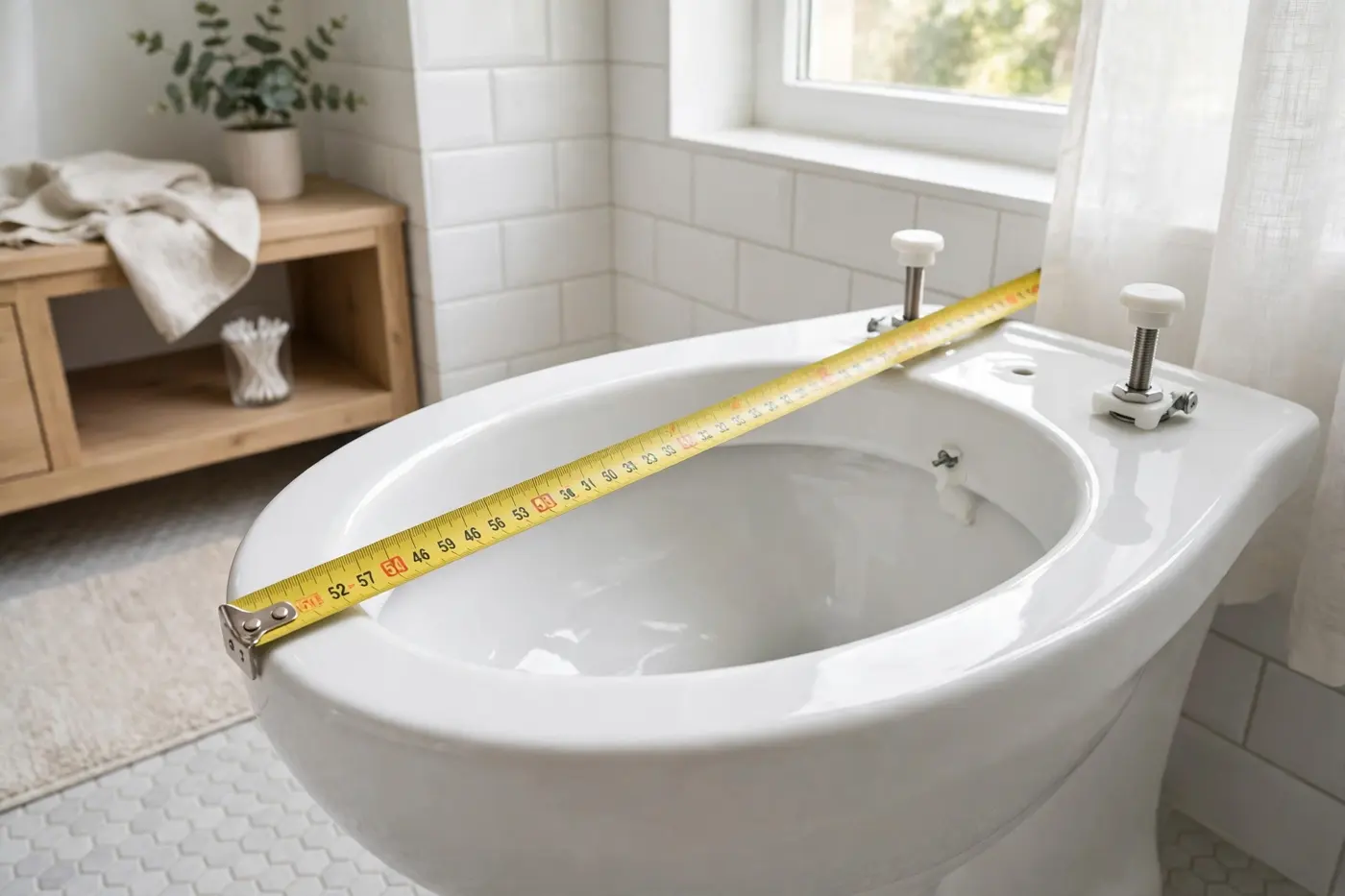
Old seat with worn hinges, loose bolts, and a ring that shifts, creaks, and drops the lid with a bang at night.
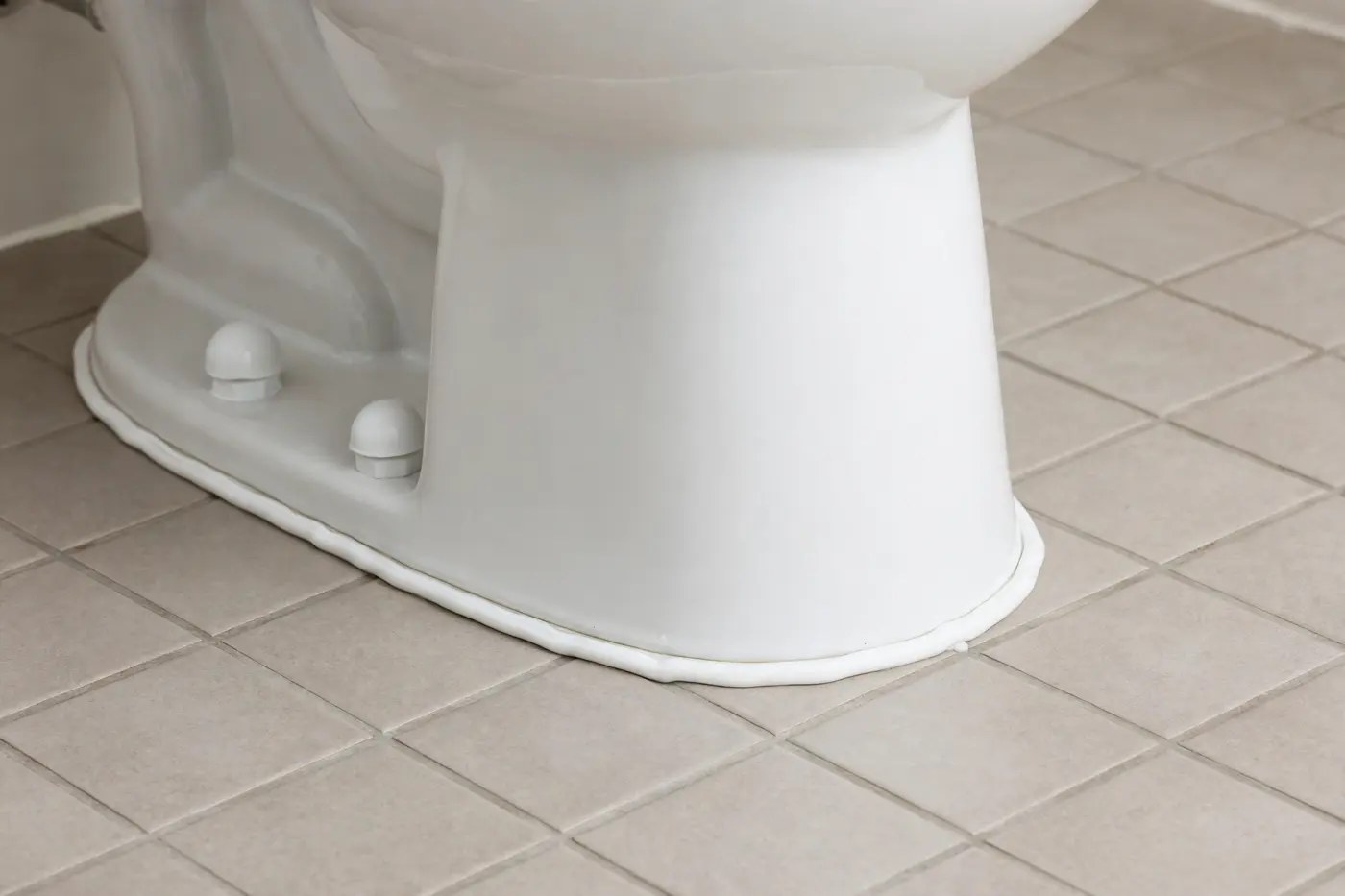
New seat matched to the bowl shape, aligned on clean mounting holes, secured with fresh hardware, and tested so it sits still and closes with control.
The fitting matters as much as the seat itself. A good seat on worn bolts will loosen again within weeks. A correct visit replaces the hardware, cleans the mounting surface, and aligns the ring so weight spreads evenly across the bumpers. That is why the seat stays put long after the visit, and why the lid and ring move as one smooth unit instead of rattling at the back.
How a toilet seat replacement visit works, step by step
There is no plumbing to open and no water to shut off for a standard seat swap. The work is careful measuring, clean removal, and a secure fit.
Measure the bowl
The technician measures from the center of the mounting holes to the front of the bowl and checks the bolt spread. This confirms round or elongated shape before any seat is opened, so the new ring follows the bowl edge with no overhang and no short gap at the front.
Remove the old seat
Bolt caps are lifted and the old nuts are loosened from below or above, depending on the design. Corroded metal bolts can need extra care so the porcelain around the holes is not chipped. The old seat and all of its hardware come away as one unit.
Clean and check the mounting area
The top of the bowl around the holes is cleaned and checked for cracks, rust marks, and worn enamel. A clean, sound surface lets the new hinges sit flat. If the porcelain is damaged, the technician shows you before fitting anything new.
Fit and align the new seat
New posts and bolts go through the holes, the seat is centered left to right, and the ring is checked against the bowl rim all the way around. Alignment at this stage is what stops the slow side-to-side drift that loosens seats over time.
Secure the hardware
Nuts are tightened evenly, snug enough to hold firm without stress on the porcelain. Many modern seats use nylon hardware that resists corrosion in a damp bathroom and can be removed later without tools biting into rusted metal.
Test the fit
The lid and ring are raised and lowered several times, soft-close hinges are checked for an even, slow drop, and the seat is pressed at each side to confirm there is no rock or slide. You check the feel yourself before the visit ends.
Simple checks you can do before you call
A few quick checks help you describe the problem clearly, and sometimes they settle a minor looseness on their own.
- Lift the bolt caps at the back of the seat and hand-tighten each bolt, then test for slide.
- Sit and shift your weight gently. Note whether the movement is in the ring, the hinges, or the whole toilet.
- Look under the ring for flat or missing bumpers.
- Measure the bowl length so you can tell us round or elongated during the call.
- Check for a crack in the ring by running a fingertip lightly along its underside edge.
Stop point: if the whole toilet rocks on the floor — not just the seat — stop and call. That points to the floor flange or the seal under the base, which is a different job. See our wax ring replacement and flange repair pages for how that is handled.
Materials and hinge styles, in plain terms
Seats come in molded wood with an enamel finish, solid plastic, and cushioned styles. Molded wood feels firm and warm and suits most family bathrooms. Plastic is light, resists moisture well, and is common in rentals and busy homes. Cushioned seats feel soft at first but split sooner, so they suit a low-use bathroom.
Hinges matter just as much. Standard hinges are simple and proven. Soft-close hinges lower the lid slowly and quietly. Quick-release hinges let the whole seat lift off its posts for deep cleaning around the back of the bowl — a real help in homes with young children. During your call, tell us which style you prefer and the technician will confirm what fits your bowl.
If the seat is for a child, a family seat with a smaller built-in ring can remove the need for a loose add-on ring that slides around. For a guest bathroom that is used hard during visits, a firm plastic seat with non-metal hardware handles moisture and cleaning with less fuss.
Round vs elongated, soft-close hinges, and seat height choices
Most seat problems trace back to fit. A seat that almost matches the bowl will loosen, look off, and wear out early. This section covers the three choices that decide whether a new seat feels right for years.
Round vs elongated: measure before anything else
Bowls come in two common shapes. A round bowl is shorter front to back and is common in smaller bathrooms, older Fountain Valley tract homes, and compact half baths. An elongated bowl is longer and oval, giving more sitting room, and it is common in primary bathrooms and newer remodels. The measure is taken from the center of the seat mounting holes to the front edge of the bowl: about 16.5 inches points to round, and about 18.5 inches points to elongated.
A round seat on an elongated bowl leaves a ledge of porcelain showing at the front and puts weight in the wrong place. An elongated seat on a round bowl hangs past the front edge and looks and feels wrong. The bolt spread also matters, though most bowls share a standard spread of about 5.5 inches between holes. During a visit, the technician confirms both numbers on your actual bowl, so the seat that goes on is the seat the bowl was shaped for.
Soft-close hinges: quiet and easier on the bowl
Soft-close hinges use a damper inside the hinge barrel. The lid and ring lower at a steady, slow pace and land without a slap. In a home where the bathroom sits near bedrooms, that quiet close matters at night. It also protects the seat and bowl: a heavy lid dropped hundreds of times can crack a ring, loosen hardware, and chip enamel at the back of the bowl. Soft-close hinges remove that impact from daily use.
The damper does wear with age, and a lid that once lowered slowly may start to drop faster on one side. Uneven closing is a hinge issue, not a bowl issue, and it is one of the clear signs a seat has done its service. When you call, you can ask for a soft-close seat by name and confirm the hinge style before the visit, so there are no surprises on the day.
Seat height choices and comfort
A standard seat adds a small amount of height to the bowl rim. Raised seats add more — often used after a hip or knee procedure, or for a family member who finds a low bowl hard to rise from. There are also taller bowls, often called comfort height, where the porcelain itself sits higher; a seat choice for those bowls starts with the same measuring step, because shape still decides fit.
Height is a personal call. Too much added height can leave feet dangling for shorter users and children, which feels unsteady. The technician can talk through who uses the bathroom most — children, guests, an older parent, or a mix — and fit a seat height that suits the main users, with grab points and room to move also in mind. If a raised seat is chosen, secure clamping hardware matters, because a raised seat that shifts is worse than a standard seat that fits well.
Round seat
- Suits shorter bowls, about 16.5 inches from holes to front edge
- Common in compact bathrooms and older tract homes
- Takes less room front to back
- Feels right when the ring follows the bowl edge closely
Elongated seat
- Suits longer oval bowls, about 18.5 inches from holes to front edge
- More sitting room along the length of the ring
- Common in primary bathrooms and remodels
- Needs the longer measure confirmed before fitting
One more fit note for Fountain Valley homes: many bathrooms here date from the 1960s and 1970s tract builds, and some still carry their original bowls. Older bowls can have slightly worn mounting holes or enamel that has thinned around the back ledge. A careful fitting — clean surface, fresh nylon hardware, even tightening — protects that older porcelain while the new seat does its job. If the bowl itself is cracked or the toilet rocks at the base, the technician will say so plainly and point you to toilet replacement or base repair instead of fitting a seat onto a failing bowl.
Seats connect to the rest of the toilet
A seat visit sometimes reveals a second issue worth knowing about. A handle that sticks or a tank that refills on its own is not a seat problem, but it is often noticed at the same time. Explore related services, or check areas we serve and our guide on how to replace a toilet seat and measure for fit.
Parts Repair
Handles, chains, and flush parts that stick, snap, or stop working.
View service →Bidet Installation
Bidet seats and attachments fitted to your existing bowl.
View service →Toilet Replacement
When the bowl or tank itself is cracked, stained through, or outdated.
View service →Fill & Flush Valve
Running, slow filling, and weak flush problems inside the tank.
View service →Toilet seat replacement questions
How do I know which toilet seat replacement size fits my Fountain Valley toilet?
Measure from the center of the seat mounting holes to the front edge of the bowl. A round bowl measures about 16.5 inches and an elongated bowl about 18.5 inches. The technician confirms the measurement and the bolt spread during the visit before fitting the new seat.
Can a toilet seat replacement fix a seat that slides side to side?
In most cases, yes. Sliding usually comes from worn hinge posts, loose bolts, or a cracked seat ring. The technician checks the hinges and mounting holes first, then fits a seat with secure hardware and tests it for movement before finishing.
What is a soft-close toilet seat replacement and is it worth choosing?
A soft-close seat uses damped hinges so the lid and ring lower slowly instead of dropping. It cuts noise and reduces stress on the hinges and bowl. During your call you can ask for a soft-close toilet seat replacement and the technician will bring hinge options that fit your bowl shape.
How long does a toilet seat replacement visit usually take in Fountain Valley?
Most seat swaps are a single short visit once the correct size and shape are confirmed. Time grows if the old bolts are corroded or the mounting holes need cleaning and repair. The technician confirms the scope with you before any work starts.
Should I choose a taller toilet seat replacement for an older family member?
A raised seat or a taller comfort-height setup can make sitting and standing easier for some people. The right choice depends on the bowl height and how the seat will be used each day. Tell us during the call and the technician will talk through seat height choices during the visit.
What happens during a toilet seat replacement appointment in Fountain Valley?
The technician checks the bowl shape, bolt condition, and hinge wear first, then removes the old seat and cleans the mounting area. The new seat is aligned, secured, and tested by sitting weight and by opening and closing the lid several times. You see the finished fit before the visit ends.
Ready for a seat that sits still and closes quietly?
Call during open hours — Mon–Fri 7:00 AM–10:00 PM, Sat 8:00 AM–10:00 PM, Sun 7:00 AM–9:00 PM — and we will connect you with a local toilet specialist for your seat replacement.
📞 Call Now — (714) 410-0362 Prefer email? info@toiletrepairfountainvalleyca.comOne last measuring habit: before the old seat comes off, note where its hinges sit against the bowl's mounting holes — a phone photo of the bolt spacing saves a second trip when the new seat's hardware differs from the old one's layout.