Urgent Toilet Repair in Fountain Valley, CA
Overflowing toilet, water that will not stop, or your only toilet out of action — shut the water off, then call during open hours and one call connects you with a local toilet specialist.
📞 Call Now — (714) 410-0362Urgent help inside our open hours
This page is for toilet trouble that cannot sit on a list for days: active water, a blocked only toilet, a sewage smell with drain noise. We take these calls during our open hours — Mon–Fri 7:00 AM–10:00 PM, Saturday 8:00 AM–10:00 PM, Sunday 7:00 AM–9:00 PM — and we order the day so active water faults are handled first.
Being clear about hours protects you. If your toilet fails during open hours, call right away at (714) 410-0362 and say what is happening: water flowing, bowl rising, smell, or a dead flush in a one-bathroom home. The call handler will ask a short set of triage questions and connect your job with a local toilet specialist. If the failure happens after lines close in the evening, the steps further down this page show you how to shut the water off and make the bathroom safe, so the home stays dry until lines open in the morning and you can call then.
Most urgent toilet trouble falls into four groups. The first is water on the move: a toilet overflowing onto the floor, a tank that fills and spills down its overflow without stopping, or a supply fitting spraying or dripping fast behind the toilet. Water faults come first because every minute of flow adds damage to flooring, baseboards, and the ceiling below in two-story homes. The second group is the blocked only toilet: the bowl will not clear, and the home has no second bathroom to fall back on. The third group is sewage signs: a strong sewage smell at the toilet, bubbling or gurgling in the bowl when other drains run, or waste coming back up. Those signs can point past the toilet itself, into the drain, and they need a prompt, careful check. The fourth group is the sudden dead toilet: a flush that does nothing in the home's only bathroom, often a snapped chain, a failed fill valve, or a broken handle at the worst moment.
- Toilet overflowing, or bowl water rising toward the rim
- Water flowing into the tank or bowl that will not stop
- Spraying, dripping, or pooling water at the supply fitting or base
- The only toilet in the home blocked or unable to flush
- Strong sewage smell with gurgling or bubbling in the bowl
- A sudden dead flush with guests, children, or elders in the home
Faults that can safely wait for a planned visit include a slow fill, a faint hiss, a loose seat, and a handle that needs a jiggle in a home with a second working bathroom. Those still deserve a call during open hours, but they sit in the normal order of the day. If you are unsure which group your fault belongs to, call and describe it — sorting that out is part of the call handler's job.
From water on the floor to a calm, tested toilet
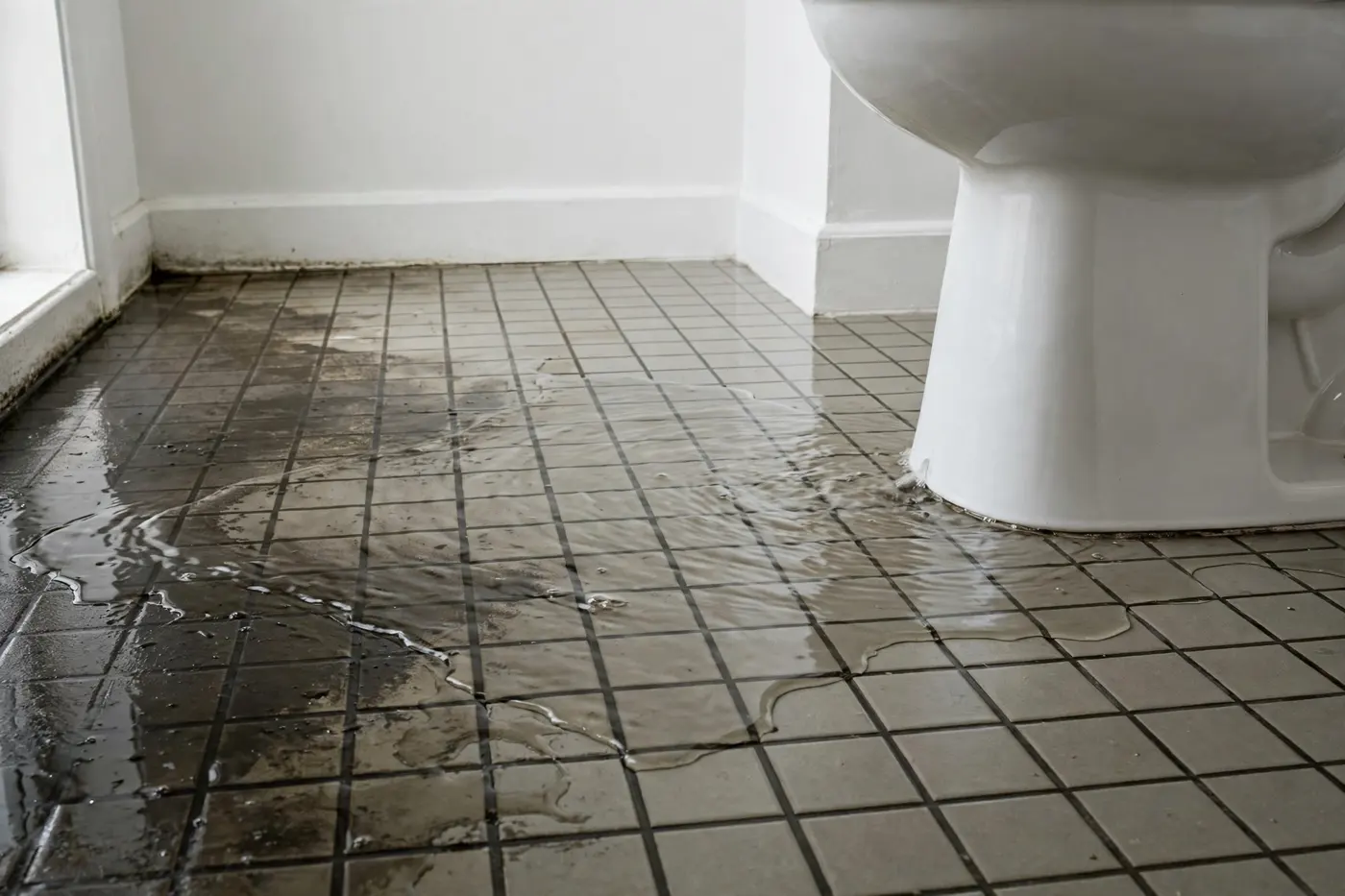
The bowl has overflowed, water stands on the tile, and the tank keeps trying to fill. Until the valve behind the toilet is closed, every flush or refill pushes more water toward the floor and the baseboards.
The water is stopped, the fault is found and fixed, and the toilet passes repeat flush tests with a dry base and a dry supply fitting. The bathroom goes back to normal use the same visit in most cases.
The first goal of an urgent visit is always the same: stop the water, then find the fault. Owners often feel the worst part is not knowing whether the problem is small or large. The visit answers that with tests, in a set order, and the findings are explained before repair work starts. A toilet that overflowed because of a bowl blockage is a different job from one that overflowed because the drain beyond it is full, and the tests separate the two quickly.
How an urgent repair visit runs, step by step
Urgent work still follows a calm order. Speed comes from triage and from testing in the right sequence, not from skipping steps.
Triage questions on your call
When you call during open hours, the handler asks what the toilet is doing, whether water is still flowing, whether you could close the shut-off valve, and whether this is the only toilet in the home. Active water and one-bathroom homes are placed first in the order of visits for that day.
Water secured on arrival
The technician confirms the water is off at the toilet valve, or closes it on arrival. Standing water is checked at the base, the supply fitting, and the floor edges so the full extent of the spill is known before repair work begins.
Fault found by ordered tests
The tank parts are checked for a fill that will not stop, the bowl is tested for a trapway blockage, and nearby drains are run to see whether the fault sits in the toilet or deeper in the line. Each test rules a cause in or out, so the repair targets the real fault.
Findings explained, scope confirmed
You hear what failed, what the repair involves, and what happens if the check points deeper — for example to the flange, the seal, or the drain. The scope is confirmed with you before any work starts, even on an urgent visit.
Repair carried out
The blockage is cleared with the right tool for its depth, the failed valve or part is replaced, or the leaking fitting or seal is renewed. Work stays focused on returning this toilet to safe, normal use first; anything that can be planned is discussed as a separate, later step.
Repeat tests before the visit ends
The water goes back on, the tank fills and stops, and the toilet is flushed several times — including a paper test after a blockage — while the base and fittings are checked dry. The technician also shows you the shut-off valve and how to close it, so you hold that knowledge for the future.
Many urgent calls resolve into one of our standard services once the water is safe: a deep blockage becomes a clogged toilet job, a fill that will not stop becomes a fill valve and flapper replacement, and water at the base becomes toilet leak repair. If the toilet itself has cracked, toilet replacement is discussed while everything is already open and visible. Our guide on what to do when a toilet overflows covers the first minutes in more detail, and areas we serve lists every neighborhood we cover.
Your first five minutes: stop the water safely
These steps protect your floor and your home while you wait for a visit during open hours, or while you wait for lines to open in the morning. Work in order, and do not flush again once trouble starts.
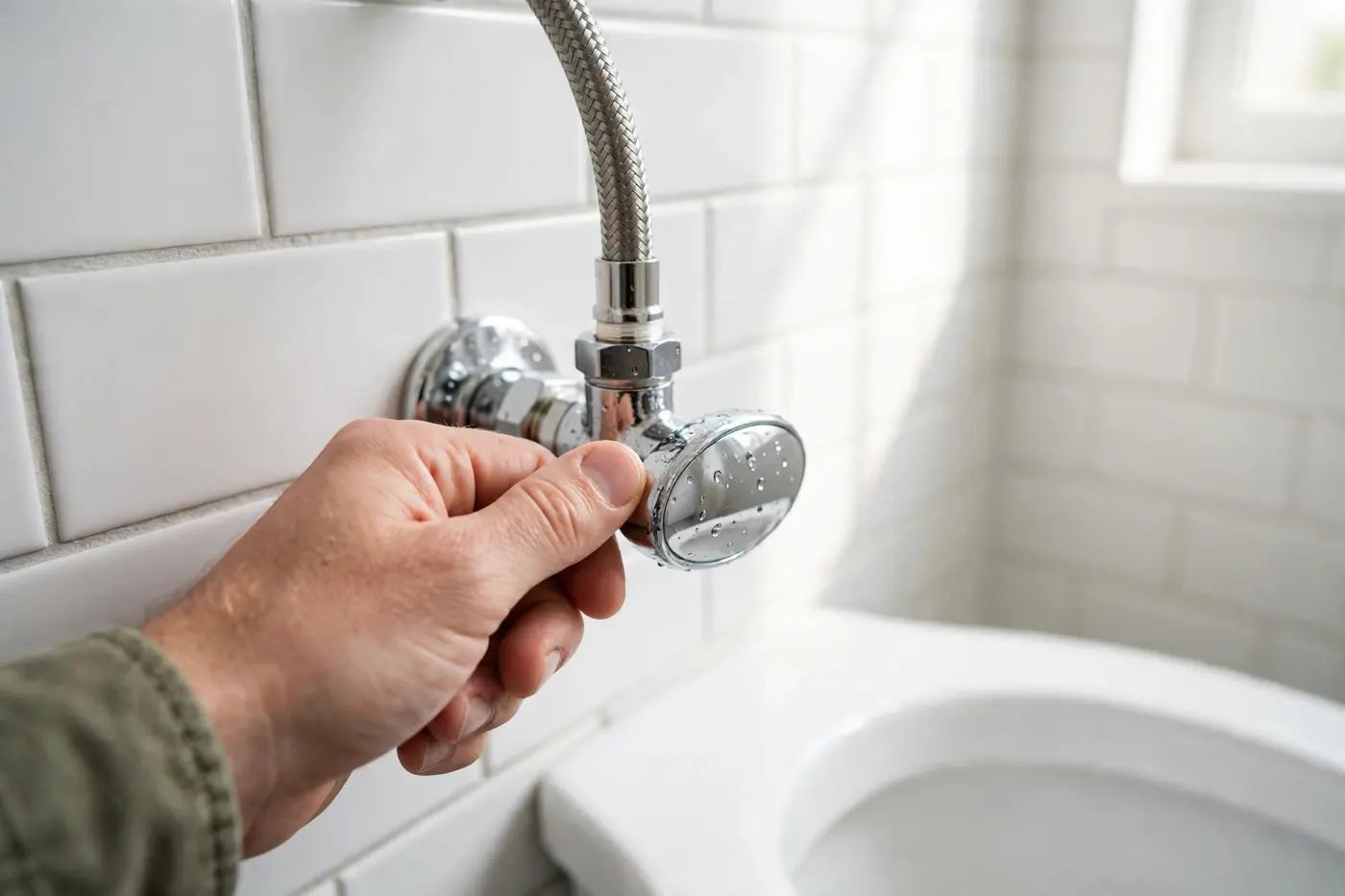
Minute one — close the shut-off valve. Look behind the toilet, low on the wall to one side of the base. You will see a small oval or round handle joined to a pipe and a flexible line running up to the tank. Turn that handle clockwise, with steady hand pressure, until it stops. The tank will stop filling and the bowl will stop rising. This one turn is the single most useful act in any toilet emergency, which is why our guide on how to shut off water to a toilet exists as its own page.
If the valve will not turn, stop the fill inside the tank. Lift the tank lid and set it on a towel. If water is running because the flapper is held open, press the flapper flat with a gloved hand. If the tank is overfilling, lift the fill valve float — the cup or ball that rides on the water — and hold it up; the flow will stop while you hold it. You can prop the float with a clean stick across the tank rim so your hands stay clear. Do not force a stuck wall valve with tools; a valve that snaps or starts spraying makes the fault worse.
Protect the floor. Towels around the base soak up standing water and keep it from wicking into baseboards and under flooring. If water has reached a wood or laminate floor, lift what you can off it and keep air moving with a fan once the water is stopped. Note where the water reached — the technician will ask, and it helps the check of the base seal and the floor beneath. Keep children and pets out of a bathroom with sewage signs, and close the door if the smell is strong.
Stop point: do not use chemical drain cleaners in a toilet, do not keep plunging a bowl that gurgles in other drains too, and do not remove the toilet yourself. Gurgling in a tub or sink when the toilet is flushed points to the main drain, and that changes the job. Stop the water, protect the floor, and call (714) 410-0362 during open hours — Mon–Fri 7:00 AM–10:00 PM, Sat 8:00 AM–10:00 PM, Sun 7:00 AM–9:00 PM.
Triage: how urgent calls are sorted, and why
Triage is a simple idea borrowed from any busy workshop: sort by harm, not by who called first. On the urgent line, the sorting question is always about water and about need. Is water moving where it should not be? Is the home left without a working toilet? Is there a sign the drain itself is involved? A yes to the first question puts a call at the front, because water damage grows by the minute and a stopped leak is always a smaller job than a soaked floor. A yes to the second matters because a one-bathroom home in Westmont, Los Caballeros, or the older tracts near Brookhurst has no fallback at all — a fault that a two-bathroom home can schedule calmly is a genuine hardship there.
Sewage signs sort high for a different reason: they can mean the problem is not the toilet at all. A toilet that gurgles when the washing machine drains, or a bowl that bubbles when a nearby shower runs, is telling you the shared drain or its vent is struggling. Clearing the toilet alone will not settle that, and repeated flushing can push waste where it does the most harm. The technician's ordered tests — bowl test, tank test, then running the nearby drains — exist to catch exactly this case early, before effort goes into the wrong fix.
What to tell the call handler
A clear, short account on the call makes triage faster and gets the right tools on the truck. Say what the toilet is doing in plain words: overflowing, blocked, running without stopping, leaking at the base, or dead. Say whether the water is now off, and how — valve, tank float, or not yet. Say whether it is the only toilet in the home, and whether other drains are acting oddly — a slow tub, a gurgling sink. Say whether anything went into the bowl that should not have: a toy, a wipe pack, a cleaning block holder. None of this is about blame; a foreign object is a common cause, and naming it early changes the first tool the technician reaches for.
Homes that feel urgent faults hardest
Some Fountain Valley homes feel a toilet failure more sharply than others, and it helps to say so on the call. One-bathroom condos and older single-story homes have no second toilet. Homes with a baby, an elder, or someone recovering from an illness need the bathroom back in service promptly. Rental homes add a landlord and a tenant to coordinate, which the call handler can help sequence. Holiday weekends and house guests turn a single failed toilet into a household problem within hours. Naming your situation is not asking for special treatment; it is the information triage runs on, and it is exactly what the questions on the call are for.
Finally, a word about waiting safely. With the water off at the valve, almost every urgent toilet fault becomes stable: no more flow, no more damage, nothing that worsens overnight. A blocked toilet with its water off can wait for the morning line opening without harm. An overflow with its water off is a cleaning job, not a growing disaster. That is why this page leads with the shut-off steps. They convert an emergency into a wait you can manage, until open hours and a specialist visit finish the job properly.
Urgent toilet repair questions from Fountain Valley homes
What counts as a case for urgent toilet repair?
A case for urgent toilet repair includes a toilet that is overflowing, water that will not stop flowing into the bowl or tank, a strong sewage smell with gurgling from the drain, and a failed toilet when it is the only toilet in the home. These faults can damage floors or leave a household without a working bathroom. Call during open hours and describe what you see, and the call handler will put the visit in the right order.
What should I do first when I need urgent toilet repair?
When you need urgent toilet repair, first stop the water. Turn the shut-off valve behind the toilet clockwise until the flow stops, and if the valve will not turn, lift the tank lid and hold the flapper down or raise the fill valve float to stop the fill. Do not flush again. Then mop up standing water to protect the floor, and call (714) 410-0362 during open hours to be connected with a local specialist.
What are the open hours for urgent toilet repair calls?
Open hours for urgent toilet repair calls are Monday to Friday 7:00 AM to 10:00 PM, Saturday 8:00 AM to 10:00 PM, and Sunday 7:00 AM to 9:00 PM. Calls are answered and visits are arranged inside those hours. If your toilet fails outside those hours, shut the water off at the valve behind the toilet so the home stays dry and safe, then call when lines open in the morning.
How is an urgent toilet repair visit handled when I call?
An urgent toilet repair visit starts with a short set of questions on the call: what the toilet is doing, whether water is still flowing, and whether it is the only toilet in the home. That triage puts active water faults first. The technician then checks the shut-off, the tank parts, and the drain in a set order on arrival, explains the findings, and confirms the scope with you before any work starts.
Can urgent toilet repair handle a toilet that keeps overflowing?
Yes. Urgent toilet repair covers a toilet that keeps overflowing, starting with stopping the water and checking whether the blockage sits in the bowl trapway or deeper in the drain. The technician clears the bowl with the right tools, tests with repeat flushes and paper, and checks for gurgling in nearby drains that would point to a wider drain fault. You hear the findings before any further work is discussed.
Should I call for urgent toilet repair if my only toilet has failed?
Yes. If your only toilet has failed, call for urgent toilet repair during open hours and say plainly on the call that the home has no working toilet. That fact changes the order of the day, because a household cannot wait in the same way a home with a second bathroom can. Shut the water off if water is flowing, keep the bathroom door closed if there is a sewage smell, and make the call as soon as lines open.
Water moving or only toilet down? Call now.
Urgent calls are taken during open hours — Mon–Fri 7:00 AM–10:00 PM, Sat 8:00 AM–10:00 PM, Sun 7:00 AM–9:00 PM. Shut the water off first, then call and one call connects you with a local toilet specialist.
📞 Call Now — (714) 410-0362 Prefer email? info@toiletrepairfountainvalleyca.com