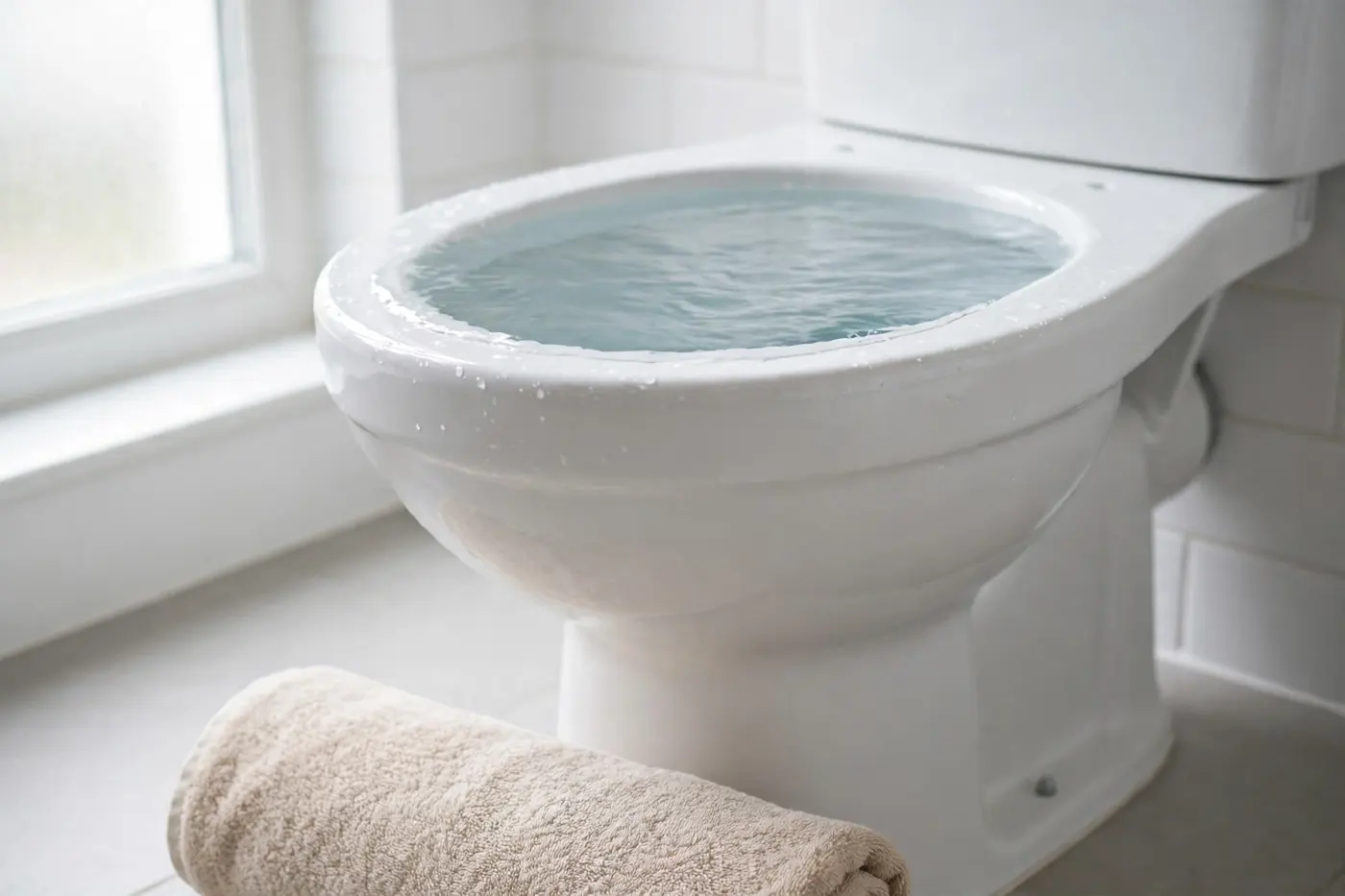
Quick answer
Problem: Bowl water rises over the rim because the drain is blocked while the tank keeps sending water in.
Solution: Shut the wall valve, stop the tank refill, protect the floor, then clear the clog once the level drops.
When to call: If water spread widely, other fixtures back up, or the bowl rises again after clearing, call for urgent toilet repair during open hours.
In this guide
An overflowing toilet feels like an emergency because it is one for your floor. Water moves fast, and bathroom water is not clean once it has been in a clogged bowl. The good news is that the first moves are simple and they work in almost every home. Stop the incoming water. Protect the floor. Then deal with the clog. People get into trouble when they reverse that order: they mop while the tank keeps filling, or they flush again hoping the clog will clear, and the second tankful goes over the rim.
This guide gives you a minute-by-minute order for the first five minutes, then a calm plan for clearing and checking the bathroom afterward. Keep this page saved if your home has an older toilet or a wall valve you have never tested. If you need help right now, see our clogged toilet repair service or our urgent repair page.
Step 1: Shut the water off
Turn the wall valve clockwise
Reach behind the toilet, low on the wall, and find the oval or round handle connected to the water line. Turn it clockwise until it stops. That closes the supply to this toilet only. The bowl will stop rising once the tank empties its current load. If water is already spilling, move fast but do not yank the handle. A steady turn protects an older valve from snapping.
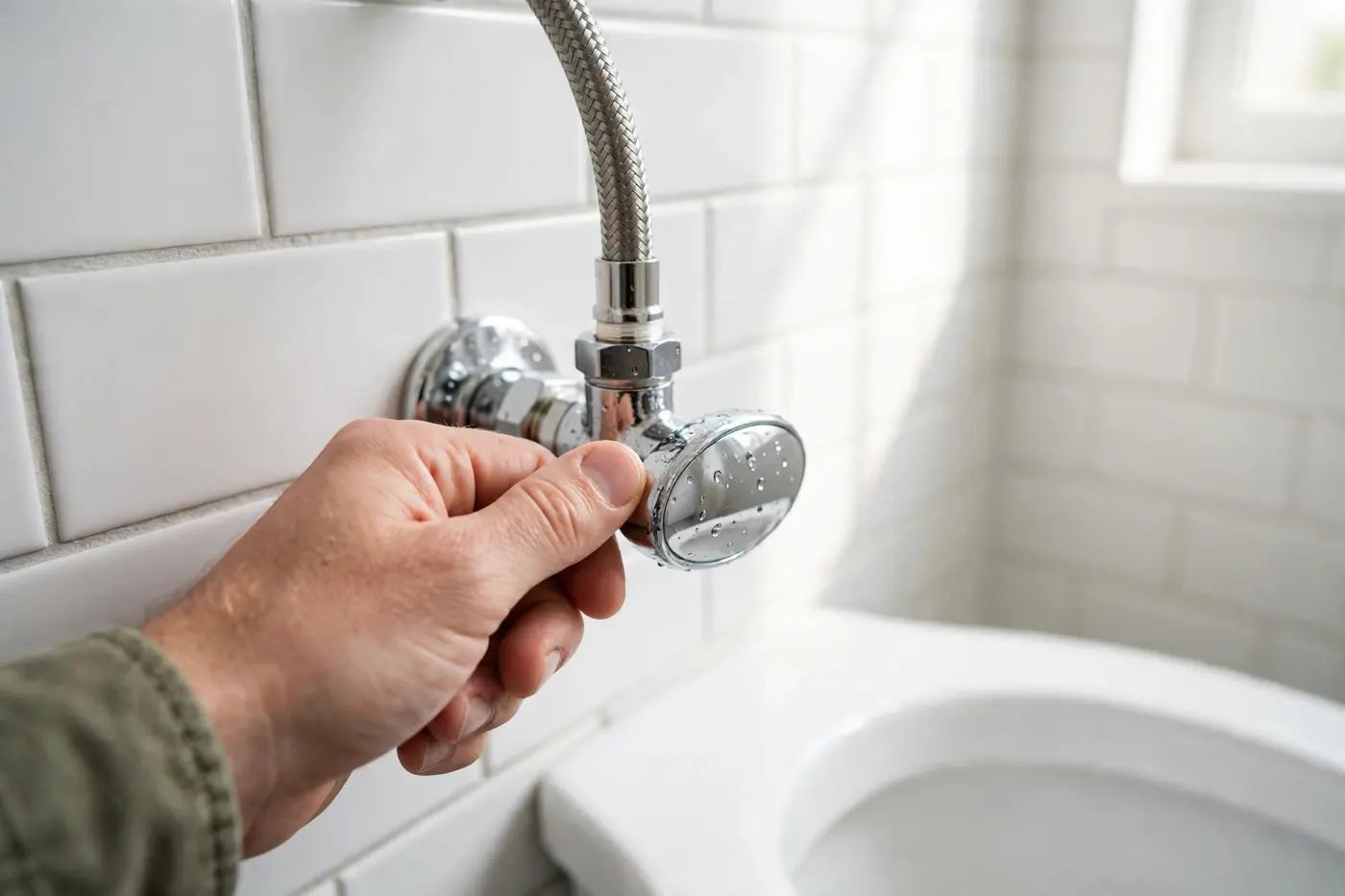
Test your wall valves on a calm day, not during a flood. A valve that has not moved in years can seize with scale, and Fountain Valley hard water makes that more likely. Turn each toilet valve off and on once a year. If a valve will not turn by hand, will not fully stop the flow, or weeps water around its stem, plan a replacement through our supply line and valve service. Knowing your valve works is the single strongest protection against an overflow disaster.
If the wall valve fails during an overflow, do not panic and do not reach for pliers. Go to Step 2 and stop the water from inside the tank. If that also fails, shut off water to the whole home at the main valve, usually near the front hose connection or the meter. A few minutes without house water is far better than a flooded bathroom and a damaged ceiling below.
Step 2: Stop the tank refill from inside
Press the flapper down and lift the float
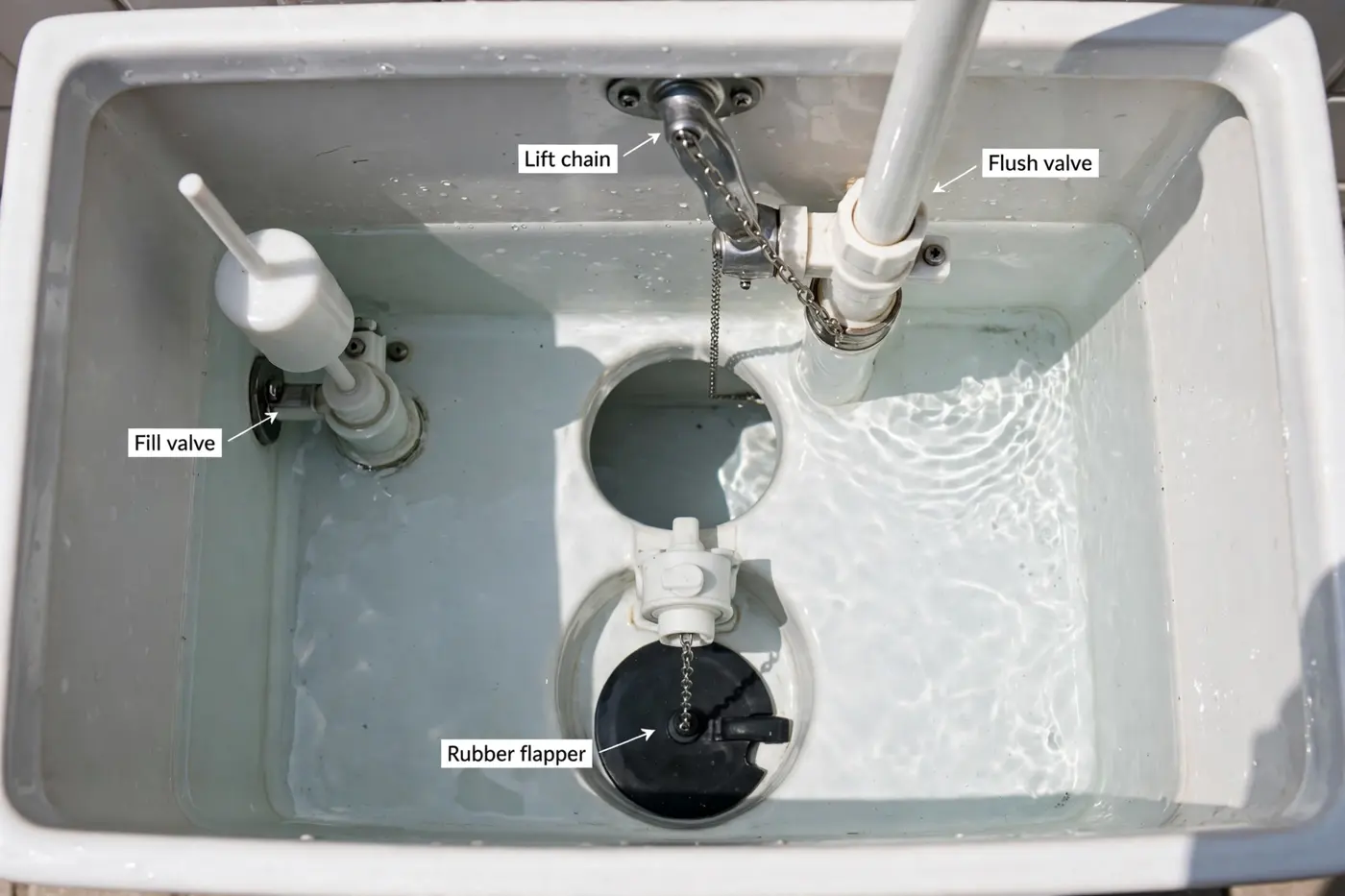
Lift the tank lid and set it on a towel, not on the wet floor. Inside, push the round flapper down over its seat to stop tank water from entering the bowl. Then lift the float, the ball or cup that rides the water level, and hold it up. Holding the float tells the fill valve the tank is full, so it stops sending water. You can prop the float arm gently or keep a hand on it while someone else closes a valve.
Once the bowl level starts to fall or holds steady, you have control. Let go slowly and watch. If the fill valve kicks back on and the level rises again, the valve or float needs attention, and the wall valve should stay closed until the repair is done. Note what you saw. A tank that refills a stopped bowl points to a fill valve fault. A tank that behaves points to a plain drain clog. That detail helps a technician arrive ready.
Never flush a second time
A clogged bowl already holds one tank of water with nowhere to go. A second flush adds a second tank on top of it. Almost every severe overflow involves that hopeful second flush. If the first flush rises instead of swirling down, hands off the handle until the clog is cleared and a test pour drains freely.
Step 3: Protect the floor and base
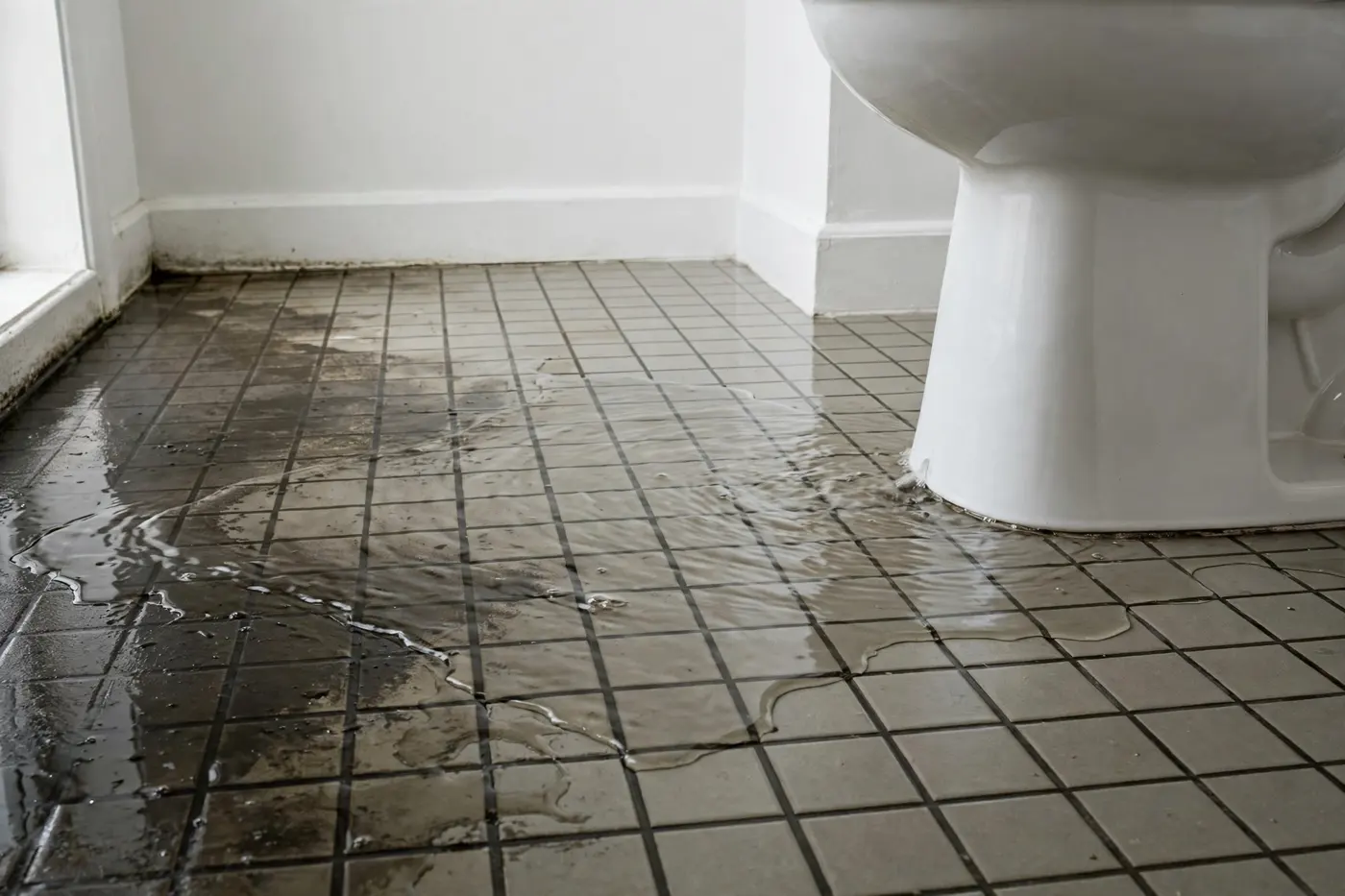
With the water stopped, turn to the floor. Move rugs, boxes, and anything paper or fabric out of the wet area. Lay towels to dam water away from walls and the door. Mop or scoop standing water into a bucket. Bowl water can carry harmful germs, so wear gloves and wash hands and arms well afterward. Work quickly around the toilet base. Water that sits at the base can slip under the fixture and soak the floor below, where you cannot see it dry.
Check where the water went. In many Fountain Valley slab homes, a bathroom overflow stays on tile and dries without lasting harm if it is cleaned up within the hour. Water that ran under vinyl, into a wood vanity base, or through a ceiling below needs closer attention. Look at the ceiling of the room below if there is one. A new stain or drip there means water got into the structure, and drying help may be needed. Do not ignore a musty smell in the days after an overflow. Odor that grows points to moisture trapped under flooring.
Step 4: Clear the clog calmly
Plunge only after the level drops
Wait until the bowl level falls well below the rim. Place a flange plunger over the drain opening with water covering the cup. Plunge with steady strokes for 15 to 20 seconds, keeping the seal. Test by pouring a bucket of water into the bowl. If the pour drains freely, open the wall valve, let the tank fill, and flush once while you watch. If the pour sits high, try a closet auger or stop and call. Our full method is in the clog guide.
Stay alert for wider signs while you work. If plunging this toilet makes water rise in the nearby tub, the blockage sits in a shared drain line, not in this toilet. Stop plunging. Forcing pressure into a shared blockage can push waste water out of the lowest fixture in the home. A shared-line backup needs drain service, and the toilets should stay unused until it is cleared.
Step 5: Check for hidden damage
After the toilet drains and flushes normally, check the base again. Flush twice and watch the floor line around the fixture. Water that seeps at the base during a flush points to a wax ring that no longer seals. An overflow can reveal a weak ring, but rocking the toilet during plunging can also harm one. A toilet that rocks should not be used hard until the ring and flange are checked. See our wax ring replacement page and flange repair page for how that work goes.
Clean the bathroom with care. Disinfect hard surfaces the water touched, including the floor around the base and the lower walls if splashing reached them. Wash towels in hot water. Throw away anything porous that soaked in bowl water and cannot be washed, such as cardboard boxes. Ventilate the room until surfaces are fully dry. These steps sound basic, yet they are the difference between a bad hour and weeks of odor and mildew.
How to prevent the next overflow
Most overflows trace back to three causes: a clog that built up over time, a weak flush that left material behind, and a valve no one had tested. Address each one. Keep wipes, paper towels, and hygiene products out of the toilet even if packaging suggests otherwise. They do not break down like toilet paper and they stack up in traps and older drain lines. Keep the flush strong by checking rim jets and tank parts once or twice a year. Test each wall valve yearly so you know it will close when you need it.
Teach everyone in the home the two key moves: hands off the handle when water rises, and wall valve clockwise. A child who knows not to flush twice prevents more damage than any tool in the garage. If overflows repeat, or if this overflow came with gurgling, slow drains elsewhere, or base seepage, call Toilet Repair Pro during open hours. The technician checks the drain, the flush strength, and the base seal, and confirms the scope with you before any work starts. Find your neighborhood on our areas we serve page.
Teaching the household the overflow drill
An overflow is handled well when everyone in the home knows the same two moves without thinking. Move one: if bowl water rises instead of swirling down, never touch the handle again. Move two: turn the wall valve clockwise, or call an adult who can. Walk children and guests through these moves once, on a calm day, and show them where the valve sits. It takes two minutes, and it turns a panic moment into a routine one.
Keep the tools for the job where they belong. A flange plunger stored in a garage is of little use during a flood. Keep one beside or behind each toilet, along with gloves and an old towel set aside for cleanup. Check the plunger cup each year, since cracked rubber will not seal. Also keep the path to the home main shut-off clear if you know where it is, and note its location on your phone. During a real overflow, you will not want to hunt for any of these things. Homes with a single bathroom should treat this drill as essential, since that one toilet carries the whole household and any delay in stopping the water raises the damage quickly.
Frequently asked questions
What is the first thing to do when a toilet overflows?
Turn the shut-off valve behind the toilet clockwise until the water stops. If the valve is stuck, lift the tank lid and push the flapper down, then lift or hold the float up to stop the refill. Stopping incoming water comes before mopping or plunging.
Why does my toilet overflow instead of just staying clogged?
The bowl keeps receiving tank water while the drain is blocked, so the water has nowhere to go but up and over the rim. A second flush during a clog is the most common trigger. A fill valve that keeps running after a flush can also push a high bowl over the edge.
Should I plunge an overflowing toilet right away?
Wait until the water level drops below the rim and the supply is off. Plunging a brim-full bowl splashes contaminated water and can force water past seals. Once the level settles, plunge gently with a flange plunger and a firm seal.
What if the shut-off valve behind my overflowing toilet will not turn?
Do not force it with tools, since an old valve can break and flood the room. Hold the float up or keep the flapper pressed down to stop the refill, then shut off water to the home at the main valve if needed. Tell the technician the wall valve is stuck so it can be checked during the visit.
When is an overflowing toilet a reason to call right away?
Call right away if water reached a large floor area, if the toilet is the only one in the home, if sewage came up in a tub or shower too, or if the bowl refills and rises again after clearing. Those signs point to a deeper drain blockage or a seal problem that plunging will not fix.
Also read
Read next our guide on fixing a clog yourself or calling for help and our guide to shutting off water to a toilet. For service, see clogged toilet repair and browse all areas we serve.