Quick answer
Problem: The bowl fills, drains slowly, or will not drain at all, and each extra flush risks water on the floor.
Solution: Stop flushing, check the water level, try a flange plunger with a firm seal, then a closet auger if needed.
When to call: If plunging and an auger do not clear it, if clogs keep coming back, or if other drains gurgle too, call for clogged toilet repair during open hours.
In this guide
Almost every homeowner faces a clogged toilet at some point. The bowl water rises. Your heart sinks. You reach for the handle again, hoping one more flush will push it through. That second flush is the move that causes most bathroom floods. This guide walks through a calm order of steps. You will learn how to judge the clog, how to plunge with good form, when an auger helps, and where home tools reach their limit. Most simple clogs clear with the first two tools. The rest need a technician with the right equipment and a clear view of the drain line.
If the bowl is already near the rim, skip ahead to the stop signs section and protect the floor first. If you know you want hands-on help now, see our clogged toilet repair service. For everyone else, work through the steps in order. Each step takes only a few minutes, and each one tells you something about where the blockage sits.
Step 1: Stop the water and size up the clog
Do not flush again — read the bowl first
Leave the handle alone. Watch the water level for a full minute. If the level drops slowly, the drain is partly open and plunging has a good chance. If the level does not move at all, the trap or drain is fully blocked. Note what went in last, if you know. Paper and waste respond well to plunging. A dropped object, a thick pad of wipes, or a child toy will not break apart, and forcing it can wedge it tighter in the trap.
Check the other fixtures too. Run water in the nearest sink and listen. Flush nothing, just observe. If the sink drains fine and only this toilet is slow, the problem sits in this toilet or its short drain branch. If the tub gurgles or the sink drains slowly as well, the blockage may sit deeper in a shared line. Shared-line problems are not a plunging job. They call for a drain check by a technician.
Set towels around the base before you start. Fill a bucket with warm water and keep it nearby, not for the bowl, but for cleanup. Put on gloves. Good setup keeps a messy job controlled, and it keeps dirty water off grout and baseboards where it can cause odor and damage later.
Step 2: Plunge the right way
Use a flange plunger with a full seal
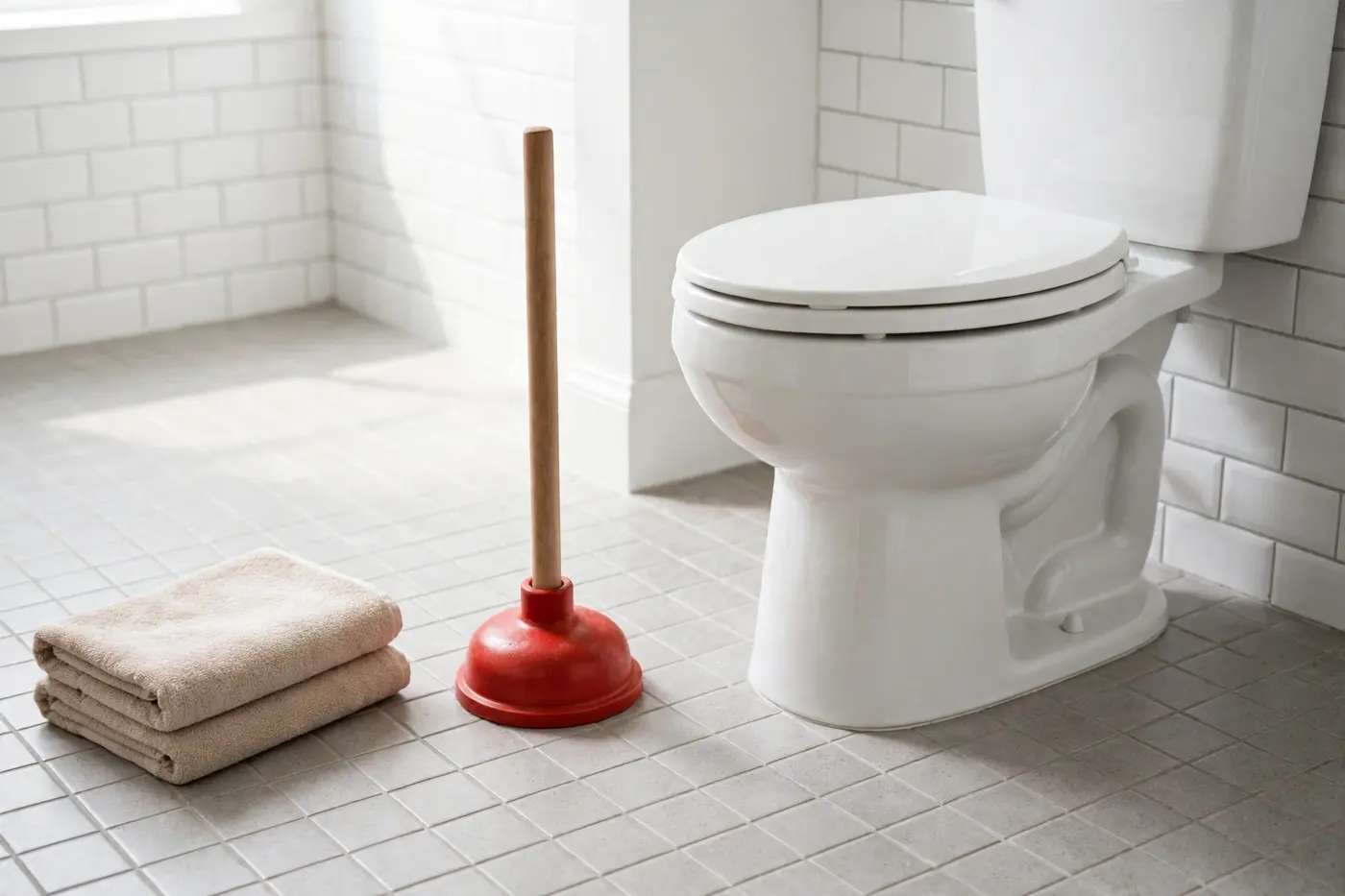
Pick a flange plunger, the kind with a fold-out cup made for toilet bowls. A flat sink plunger rarely seals in a bowl. The bowl water should cover the plunger cup. If the bowl is low, add water from a bucket until the cup is covered. Place the cup squarely over the drain opening, press down gently to push out air, then plunge with steady pushes and pulls for 15 to 20 seconds. Keep the seal the whole time. Pull the plunger away and watch. If the water drops and swirls down, flush once to test.
Form matters more than force. Wild, fast plunging breaks the seal and splashes water without moving the clog. Slow, firm strokes move a column of water back and forth through the trap, and that motion loosens paper and waste. Try two or three rounds. Between rounds, let the bowl settle and watch the level. A level that drops a bit more after each round means you are gaining. A level that never changes means the blockage is solid or sits beyond the reach of pressure alone.
One warning belongs here. Never plunge right after pouring a chemical drain cleaner into the bowl. Plunging can splash that liquid onto skin and eyes. Chemical products also rarely clear a toilet trap, since the liquid drains past or sits diluted in a full bowl of water. Skip the chemicals. Mechanical clearing, either yours or a technician visit, handles toilet clogs far more reliably. If someone already poured a cleaner in, tell the technician before work starts so care is taken with the bowl water.
Step 3: Try a closet auger
Work the cable through the trap gently
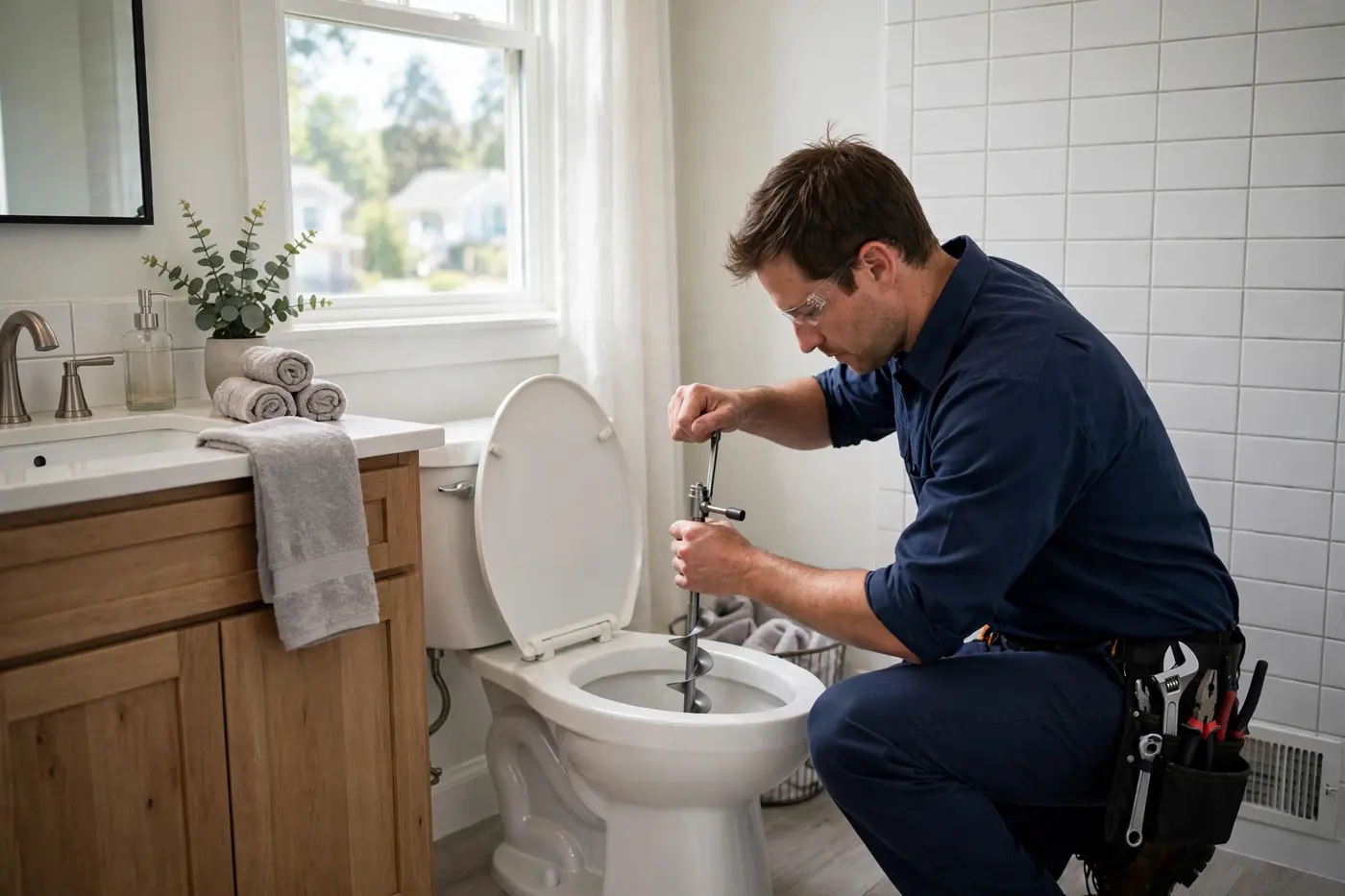
A closet auger is a short cable in a tube with a curved end that follows the toilet trap. Feed the cable end into the bowl drain, keep the protective sleeve against the porcelain, and crank slowly while pushing gently. When you feel resistance, keep cranking and ease forward. The tip either breaks up soft material or hooks it so you can pull it back. Retract slowly, clear the tip, and test with a bucket of water poured into the bowl before you flush.
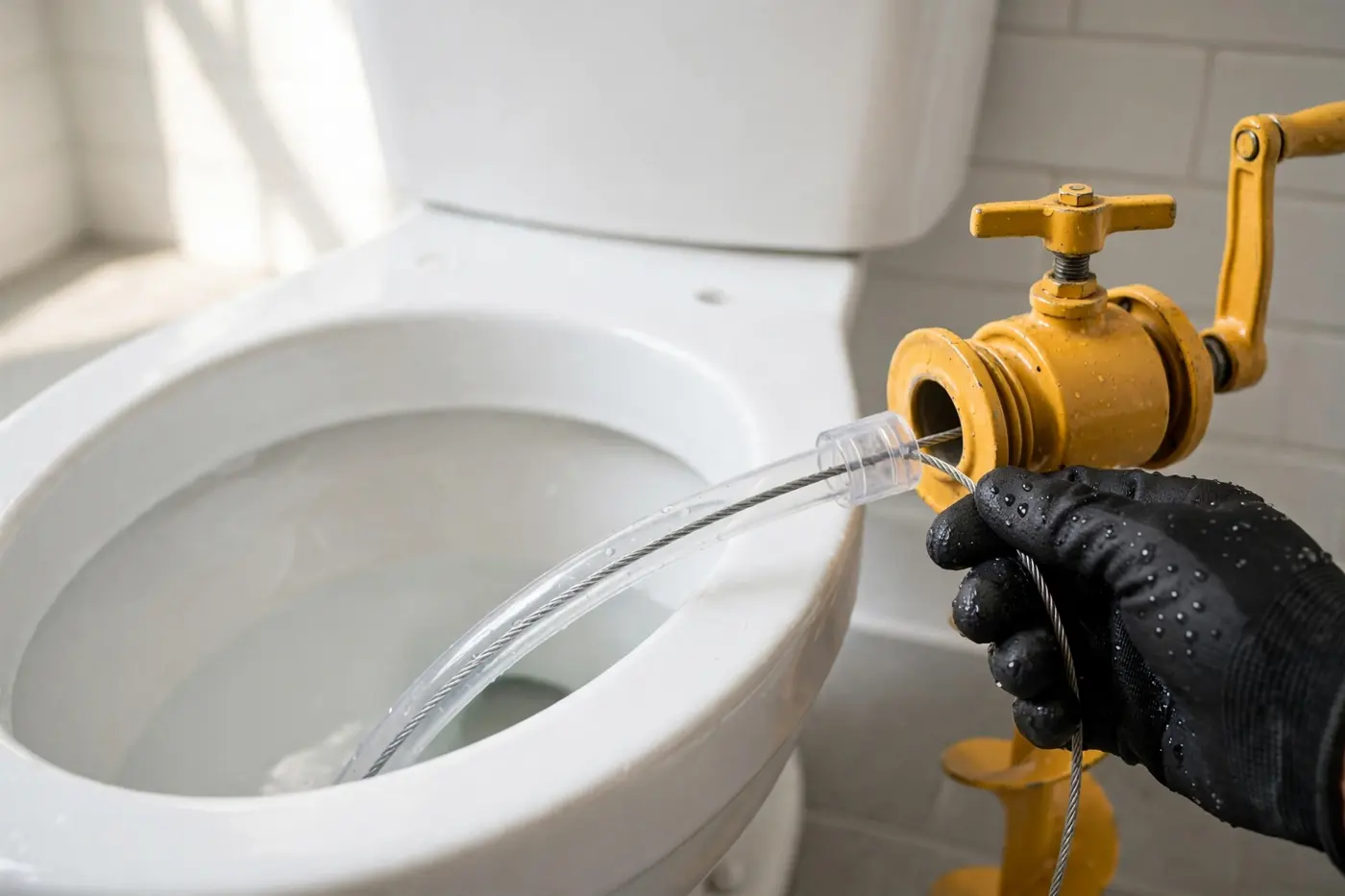
The auger reaches through the trap and a short way into the drain, farther than plunger pressure alone. It is the right tool for a toy, a wipe wad, or compacted paper sitting in the trap. Work gently. Forcing the crank against a hard stop can crack porcelain or push an object deeper where it is harder to retrieve. If the cable passes through fully and the bowl still will not drain, the blockage sits beyond the toilet, in the drain line itself. That is the natural end of home tools for this job.
Flange plunger
- Moves water pressure back and forth
- Works well on paper and waste clogs
- No contact with the blockage itself
- First tool to try, lowest risk
Closet auger
- Cable passes through the trap
- Breaks up or hooks solid blockages
- Reaches beyond plunger range
- Second tool, use with a gentle hand
Why repeat clogs point deeper
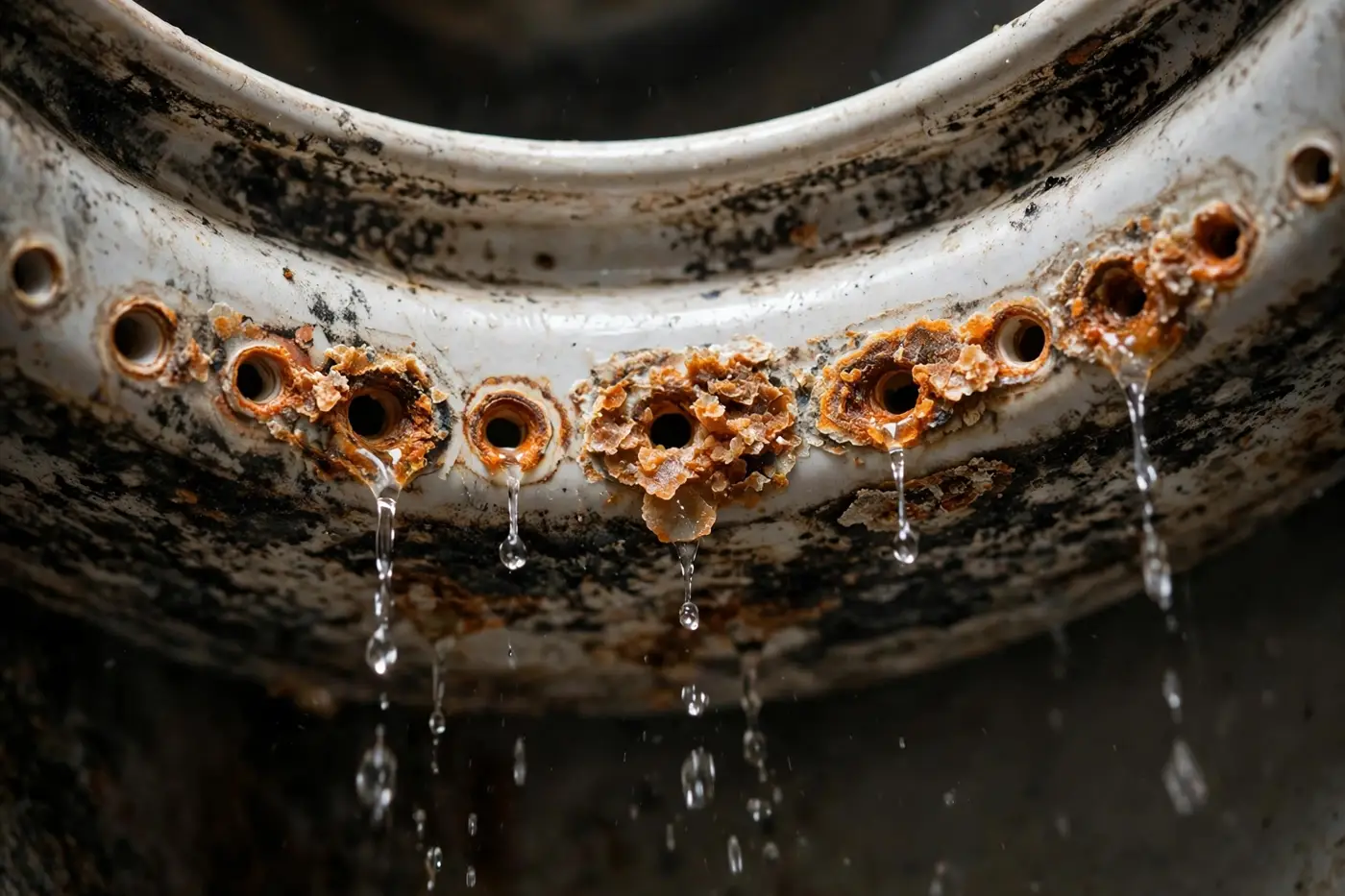
A single clog after a heavy paper load means little. A toilet that clogs every few weeks is telling you something. One common cause in Fountain Valley is mineral scale. City water is fairly hard, and scale builds on rim jets under the bowl rim. Weak jets mean a weak flush, and a weak flush leaves material behind to build into the next clog. Run a finger under the rim. If the jet openings feel rough and crusty, flush strength is part of your clog story. Our fill and flush valve page covers the tank parts that also shape flush strength.
Age matters too. Many Fountain Valley homes built in the 1960s and 1970s still drain through cast-iron lines. Cast iron roughens inside as it ages. The rough wall grabs paper that a smooth line would pass. A camera check of the line can confirm this, and a technician can explain what the line shows before any work is agreed. Another cause is a partial blockage that never fully clears. Plunging opens a small hole through it, the toilet works for a while, then the hole closes again. Only clearing the full width of the line ends that cycle.
Weak tank parts can mimic a drain problem. A flapper that closes too fast cuts the flush short. A low tank water level does the same. Before you assume the drain is at fault, lift the lid and watch one flush. The flapper should stay up while most of the tank empties. If it drops at once, parts service may solve your clogs without any drain work at all. See our toilet parts repair page for handle, chain, and flapper faults.
Clear signs to stop and call
Stop home work and call when any of these show up. The bowl does not drain after plunging and auger work. Water rises to the rim when any nearby fixture runs. You hear gurgling in the tub or shower when the toilet drains. Sewage odor comes from drains or around the toilet base. Water seeps at the base of the toilet, which can mean a failed wax ring, covered on our wax ring replacement page. Or the home has only one toilet and the clog blocks the whole household. Each sign points to work that needs drain equipment, a floor-level seal check, or both.
When you call Toilet Repair Pro, the technician checks flush strength first, then works the trap, then tests the drain line. The scope is confirmed with you before any work starts. You can confirm your neighborhood on our areas we serve page. During open hours, one call connects you with a local toilet specialist who handles clogs daily in Fountain Valley homes.
A note on older Fountain Valley drain lines
Many homes in Fountain Valley still drain through cast-iron lines laid when the tracts were built in the 1960s and 1970s. Cast iron is strong, but its inner wall roughens with age. That rough surface works like a net for paper fibers. A flush that would pass cleanly through a smooth modern line can snag, fold, and start a clog in a rough one. This is why two homes with the same toilet can have very different clog histories, and why a home with an older line may clog on paper loads that seem modest.
If your line is older, build habits that suit it. Spread heavy paper use across two flushes rather than one loaded flush. Keep a small bin in the bathroom so wipes, cotton products, and paper towels never enter the bowl in the first place. Run the toilet with a full, strong flush by keeping tank parts in good shape, since a weak flush is far more likely to leave material sitting in a rough line. When clogs still repeat after these habits change, the line itself deserves a look. A technician can check the line and explain plainly what its condition means for your home, before any work is agreed.
Frequently asked questions
How many plunger tries should I give a toilet clog before I stop?
Give a proper flange plunger two or three rounds of steady plunging with a good seal. If the water level does not drop and the bowl does not clear after that, stop. More force rarely helps and can push water past the wax ring or splash contaminated water around the bathroom.
Can a toilet clog clear itself if I wait?
A clog made only of paper and waste can soften in standing water and sometimes clears after an hour or more. A clog with a solid object, thick wipes, or buildup in the drain line will not clear on its own. If waiting does not lower the water level at all, move to plunging or call for help.
Is a closet auger safe to use on my toilet clog?
A closet auger made for toilets has a protective sleeve that guards the porcelain while the cable works through the trap. Used gently, it is the right next step after plunging. A drain snake made for sinks lacks that guard and can scratch or chip the bowl, so do not use a sink snake in a toilet.
Why does my toilet clog again every few weeks?
Repeat clogs often point past the bowl. Causes include mineral buildup narrowing the rim jets, a partial blockage deeper in the drain line, or aging cast-iron pipe with a rough inner wall that catches paper. A technician checks the flush strength first, then the trap and the drain line beyond it.
What should I do if my clogged toilet starts to overflow?
Turn the shut-off valve behind the toilet clockwise to stop the water, then lift the tank lid and push the flapper down if water is still running. Do not flush again. Mop up standing water, then call for clogged toilet help so the blockage is cleared without forcing water onto the floor.
Also read
Next, read our guide on what to do when a toilet overflows and our guide to gurgling toilet noises. For service, see clogged toilet repair in Fountain Valley and browse all areas we serve.