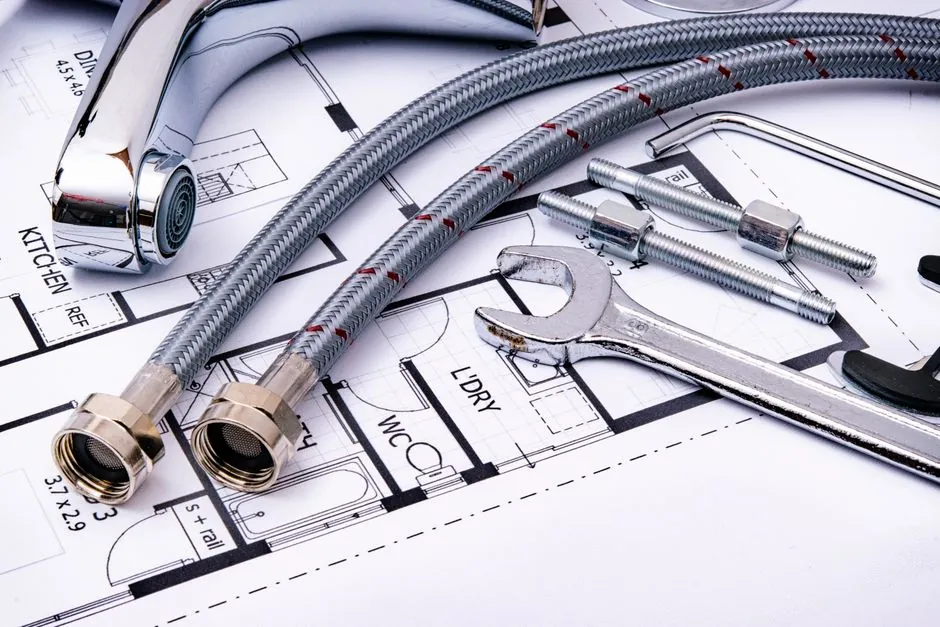
Supply Line & Shut-Off Valve Replacement in Fountain Valley, CA
A valve that will not turn or a line that drips at its fittings leaves your toilet unprotected — one call connects you with a local toilet specialist who renews both and tests them under full pressure.
📞 Call Now — (714) 410-0362The valve you never touch — until the day you need it
Behind every toilet, low on the wall, sits a shut-off valve and a short supply line that feeds the tank. They do nothing for years at a time. Then a flapper fails or a line bursts at night, and that forgotten valve becomes the only thing between a small fault and a flooded bathroom.
The shut-off valve — plumbers call it an angle stop, because it turns the water from the wall pipe upward into the toilet — has one job: close fully, on demand, after months or years of sitting still. Sitting still is hard on it. Mineral scale from Fountain Valley water builds on its stem and seat. Its washer dries and hardens. The handle, rarely gripped, seizes to the stem. Owners usually discover all of this at the worst possible moment, hand on a handle that will not budge while water moves somewhere it should not.
The supply line ages alongside the valve. Older Fountain Valley bathrooms often still have rigid copper lines or aging plastic lines from earlier decades. Rigid lines corrode at their compression fittings and crack if they are bent during other work. Flexible braided lines serve well for years, but their end seals harden with age, and a line that has been loosened and retightened several times during tank work may no longer seal cleanly. Green or white crust at a fitting, a damp patch on the wall or floor below the valve, or a line that feels stiff and chalky are all signs the assembly is living on borrowed time.
- Valve handle will not turn, or turns without stopping the flow
- Drip or dampness at the valve stem or the handle base
- Moisture or crust at either end of the supply line
- Green, white, or rust-colored buildup on the fittings
- Supply line kinked, flattened, or pulled tight with no curve
- No working way to stop water at this toilet alone
Renewing the valve and line is a contained job with an outsized payoff. A working shut-off makes every future repair in that bathroom safer and simpler: tank work, seat work, even lifting the toilet all start with closing that valve. And a fresh line removes one of the few toilet parts that can fail suddenly and spray, rather than fail slowly and drip. If you only fix one quiet part of your bathroom this year, this is a strong candidate.
From seized valve to a shut-off you can trust
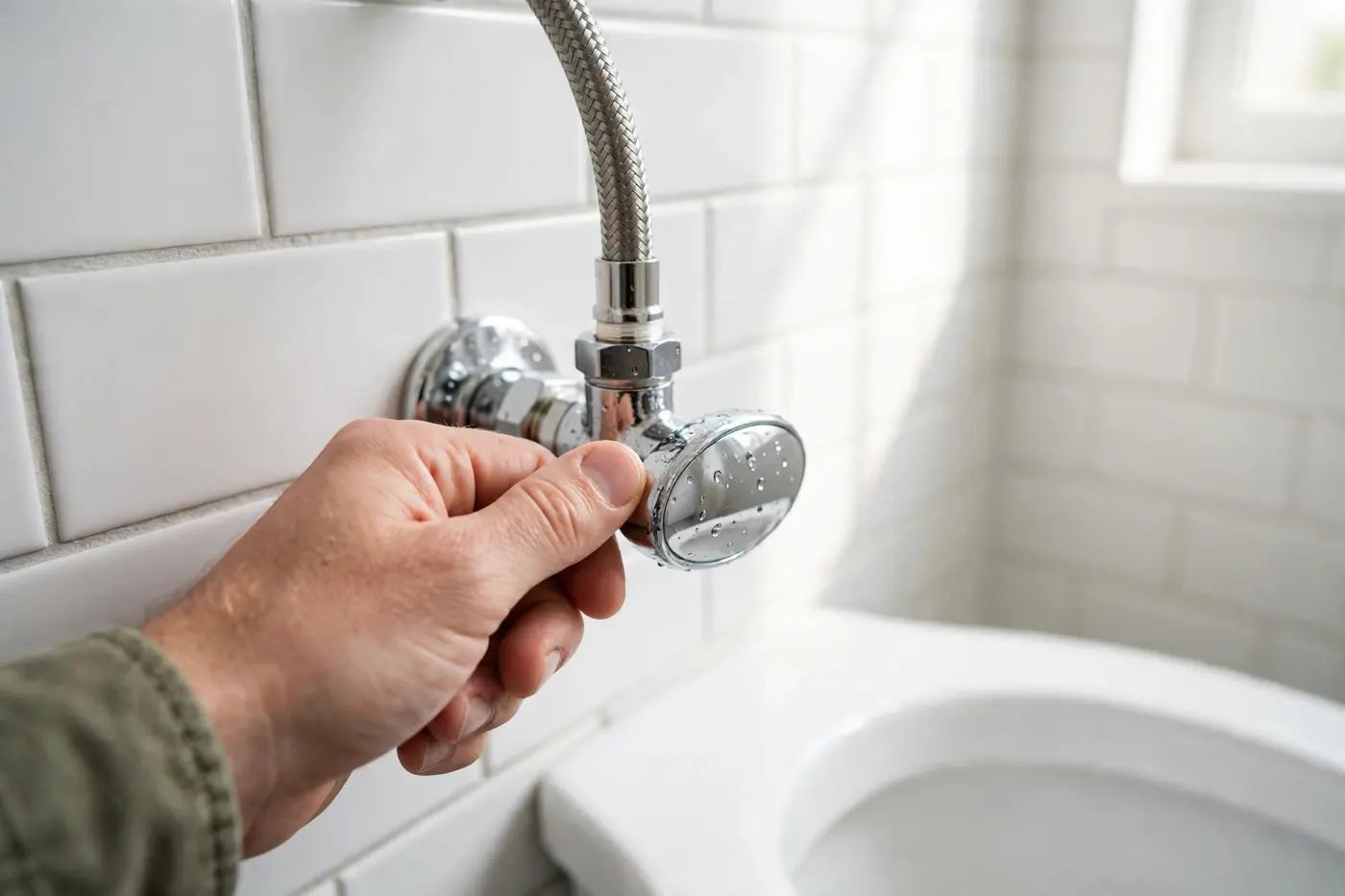
The old multi-turn valve has not moved in years. Scale grips the stem, the washer has hardened, and the supply line shows crust at both ends. In a leak, this toilet cannot be shut off at the wall at all.
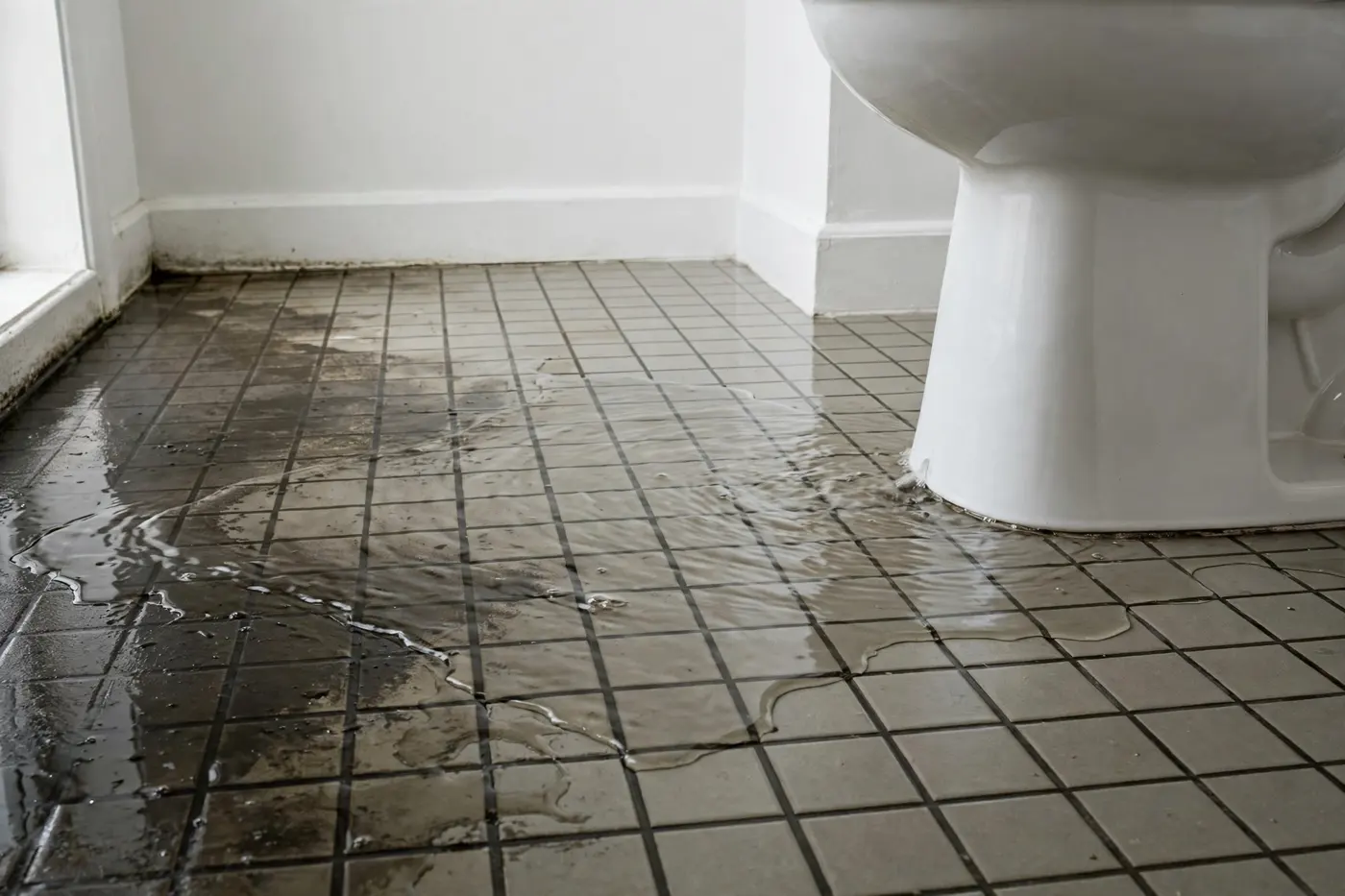
A fresh valve turns with a short, smooth motion and closes fully. A new supply line runs in a gentle curve, both fittings stay dry under full pressure, and the wall and floor behind the toilet stay clean.
The test at the end of this visit is one you take part in. The technician asks you to turn the new valve closed and open yourself, so you know its feel and its direction before you ever need it in a hurry. The tank stops filling when closed and refills when opened, and a dry tissue wiped around each fitting comes away dry. That small ritual turns an unknown fitting into a tool you actually hold knowledge of — which is the whole point of the job.
How a supply line and valve visit runs, step by step
Because the valve is the point where house water meets the toilet, this visit starts at the house supply and works outward, with every joint tested at the end.
Valve, line, and wall pipe checked
The technician tests whether the old valve moves and whether it truly stops the flow, checks both line fittings for damp and crust, and looks at the stub-out pipe coming from the wall — its material, its thread or solder joint, and its condition. The findings shape which valve style will fit your piping.
House water shut off and line drained
Since the toilet valve itself is being replaced, the water is shut off at the house supply for this bathroom or the whole home, as your layout needs. The toilet is flushed to drain the tank, and the line is opened over a pan to release the water still standing in it.
Old line and valve removed
The supply line comes off at the tank and at the valve. The old valve is then unthreaded or cut from the stub-out with care for the wall pipe, and the pipe end is cleaned and inspected. A stub-out that shows thread damage or a poor solder joint is shown to you before the new valve goes on.
New valve fitted to the stub-out
The fresh valve is fitted by the method your piping calls for — compression, thread, or solder — and set at an angle that lets the supply line rise to the tank without strain. The handle is positioned so it can be reached and turned easily behind the toilet.
New supply line connected
A new supply line of the right length is connected at the valve and at the tank inlet, hand-tight and then snugged, with the line resting in a soft curve. A line that is too short pulls at its fittings; a line that is too long kinks. The right length avoids both faults.
Pressure restored and joints tested
The house water returns, the new valve is opened, and the tank fills. Every joint — wall, valve, line ends, tank inlet — is checked with dry fingers and a tissue under full house pressure. The valve is closed and opened several times so you see it work, and the tank fill is left running cleanly.
This job often pairs with fill valve and flapper replacement, since the tank inlet is already open, and with toilet leak repair when the old line has been dripping onto the floor. If the technician is already renewing tank parts under toilet parts repair, adding the valve and line in the same visit is a natural fit. Our guide on how to shut off water to a toilet shows the valve in action, and areas we serve covers every Fountain Valley neighborhood.
Checks you can do before you call
A yearly valve test at home takes one minute and tells you whether this page applies to your bathroom. Do it on a calm day, not during a leak.
Find the valve behind the toilet and grip the handle. Turn it clockwise with steady, moderate hand pressure. A healthy valve moves. If it turns, keep going until it stops, then watch the tank: if the toilet was mid-fill, the fill should stop, and if you then flush, the tank should not refill. That proves the valve closes fully. Now turn it back open and confirm the tank refills and stops at its line. This simple close-and-open cycle, done once or twice a year, also keeps the stem from seizing in the first place.
While you are there, run dry fingers around the valve stem, the handle base, and both ends of the supply line. Any dampness, coolness, or crust is a finding worth noting. Look at the line itself: it should curve gently. A hard kink, a flattened section, or a line pulled drum-tight between valve and tank all load the fittings and shorten the line's life. Shine a phone light at the wall plate where the pipe exits; damp drywall or bubbling paint there hints at a slow leak at the wall joint.
Stop point: never force a stuck valve with pliers or a wrench. A seized stem can snap or start spraying, and then the water can only be stopped at the house supply. If the handle will not move with firm hand pressure, leave it, note it, and call (714) 410-0362 during open hours. If a fitting is actively spraying, shut the house water off first, then call.
If your valve passes the test and every fitting is dry, your bathroom is in good shape and you have gained real peace of mind for one minute of effort. If it fails any part of the test, you have found the problem on a calm day of your choosing — far better than finding it during a leak.
Angle stops and supply lines: types, faults, and the wall valve itself
The shut-off valve at a toilet is an angle stop: water arrives horizontally from the wall and leaves vertically toward the tank, turning a corner inside the valve body. Two operating styles dominate in Fountain Valley homes. Multi-turn valves, the older standard, raise and lower a stem on a thread; each full turn moves the washer a little closer to its seat, so closing takes several turns. Quarter-turn valves use a ball inside the body with a hole through it; a quarter turn of the handle lines the hole up with the flow or turns it across the flow, so the valve opens and closes with one short motion.
Each style ages in its own way. Multi-turn valves depend on a rubber washer pressed against a metal seat. The washer hardens and grooves with age, the stem threads gather scale, and the packing around the stem dries until turning the handle starts a stem drip. Because these valves sit untouched for years, the stem often seizes in the open position — the failure you discover during a leak. Quarter-turn valves have no washer to harden, and the ball wipes its seals as it turns, so they tend to stay workable after long idle stretches. Their seals can still wear, and a quarter-turn valve that has been forced against grit can score its ball, but for a fitting that must work on a rare, urgent day, the short positive motion is a real advantage. During a replacement visit, the technician will show you which style your wall piping suits and fit accordingly — compression fittings on copper stub-outs are the common case in local tract homes.
Braided lines vs rigid copper lines
The supply line comes in two broad families. Rigid copper lines are bent to shape on site and joined with compression fittings. They look neat and can serve for decades, but they are unforgiving: any later work that bends them — a tank swap, a valve change, a knock from a cleaning bucket — work-hardens the copper and can start a fitting weeping. They also transmit every strain straight to the valve and the tank inlet. Braided flexible lines, stainless braid over a flexible inner tube, forgive small movements and install without bending tools. Their weak points are the end seals and the crimped collars, which age with heat and time; a braided line is a renew-on-schedule part, not a fit-and-forget part, and pairing a fresh line with a fresh valve, as this service does, resets both clocks at once.
When the wall valve itself is the problem
Sometimes the check shows the fault sits deeper than the valve: the stub-out pipe is corroded at its thread, a solder joint inside the wall plate weeps, or the pipe is an older material that no longer takes a fitting well. Signs include damp at the wall plate itself, a valve body that rocks on a loose stub-out, or threads that crumble as the old valve comes off. In that case the technician will stop, show you the pipe, and explain what the wall work involves before anything wider begins. Most visits never reach this point — the stub-outs in Fountain Valley tract homes are generally sound copper — but knowing the line between a valve job and a wall job, and hearing it stated plainly at the right moment, is what a careful visit gives you.
One last habit is worth adopting after your new valve is fitted: turn it closed and open once or twice a year, perhaps when you change a bathroom clock or a smoke alarm battery. Thirty seconds of motion keeps the stem moving, proves the seals still hold, and means the valve will answer on the one day you truly need it.
Supply line and shut-off valve questions from Fountain Valley homes
What are the signs I need supply line and shut-off valve replacement?
Signs you need supply line and shut-off valve replacement include a valve handle that will not turn, a drip at the valve stem or at either end of the supply line, green or white crust on the fittings, and a rigid line that is kinked or corroded. A valve that cannot close leaves you with no way to stop water at the toilet. The technician tests the valve and the line and confirms the scope with you before any work starts.
What happens during supply line and shut-off valve replacement?
During supply line and shut-off valve replacement, the technician shuts the water off at the house supply, drains the toilet line, removes the old valve and line, and fits a fresh valve and a new supply line of the right length. The toilet is then refilled and every joint is checked dry under full pressure. You watch the valve open and close smoothly before the visit ends.
Should my supply line and shut-off valve replacement use a quarter-turn valve?
For many homes, a quarter-turn valve is a sound choice during supply line and shut-off valve replacement, because it closes with a short turn and tends to stay workable after long idle periods. Multi-turn valves can still serve well where the wall piping suits them. The technician looks at your stub-out piping, explains the fit for each style, and fits the type that suits the line and the space behind your toilet.
Can supply line and shut-off valve replacement fix a valve that will not close?
Yes. A valve that will not close is the core reason for supply line and shut-off valve replacement. Old multi-turn valves seize from mineral buildup and worn washers after years without use. The new valve is tested several times during the visit, fully open and fully closed, so you know the toilet can be isolated at once if any future fault appears. That working shut-off protects every other repair in the bathroom.
How long does supply line and shut-off valve replacement take?
Supply line and shut-off valve replacement is usually done in one visit when the wall piping is sound and the stub-out is in good shape. Work on older threaded or soldered connections takes a little longer, and the technician explains the steps before starting. If the pipe inside the wall shows damage, that finding is explained plainly, with the options, before any wider work is discussed.
Does supply line and shut-off valve replacement include a new supply line too?
In most visits, yes. Supply line and shut-off valve replacement pairs the new valve with a fresh supply line, because the old line has aged alongside the valve and its end seals are rarely worth reusing. The new line is sized to run in a gentle curve with no kink and no strain at either fitting. Both ends are checked dry after the water returns, and the old line and valve leave with the technician.
Valve stiff or line dripping? Renew both in one visit.
Call during open hours — Mon–Fri 7:00 AM–10:00 PM, Sat 8:00 AM–10:00 PM, Sun 7:00 AM–9:00 PM — and one call connects you with a local toilet specialist for Fountain Valley.
📞 Call Now — (714) 410-0362 Prefer email? info@toiletrepairfountainvalleyca.com