Quick answer
Problem: You press the handle and little or nothing happens, yet a bucket of water poured in the bowl drains freely.
Solution: Open the tank and check the chain, flapper, water level, handle, and fill valve in that order.
When to call: If the tank parts look sound yet the flush still fails, call for toilet parts repair during open hours.
In this guide
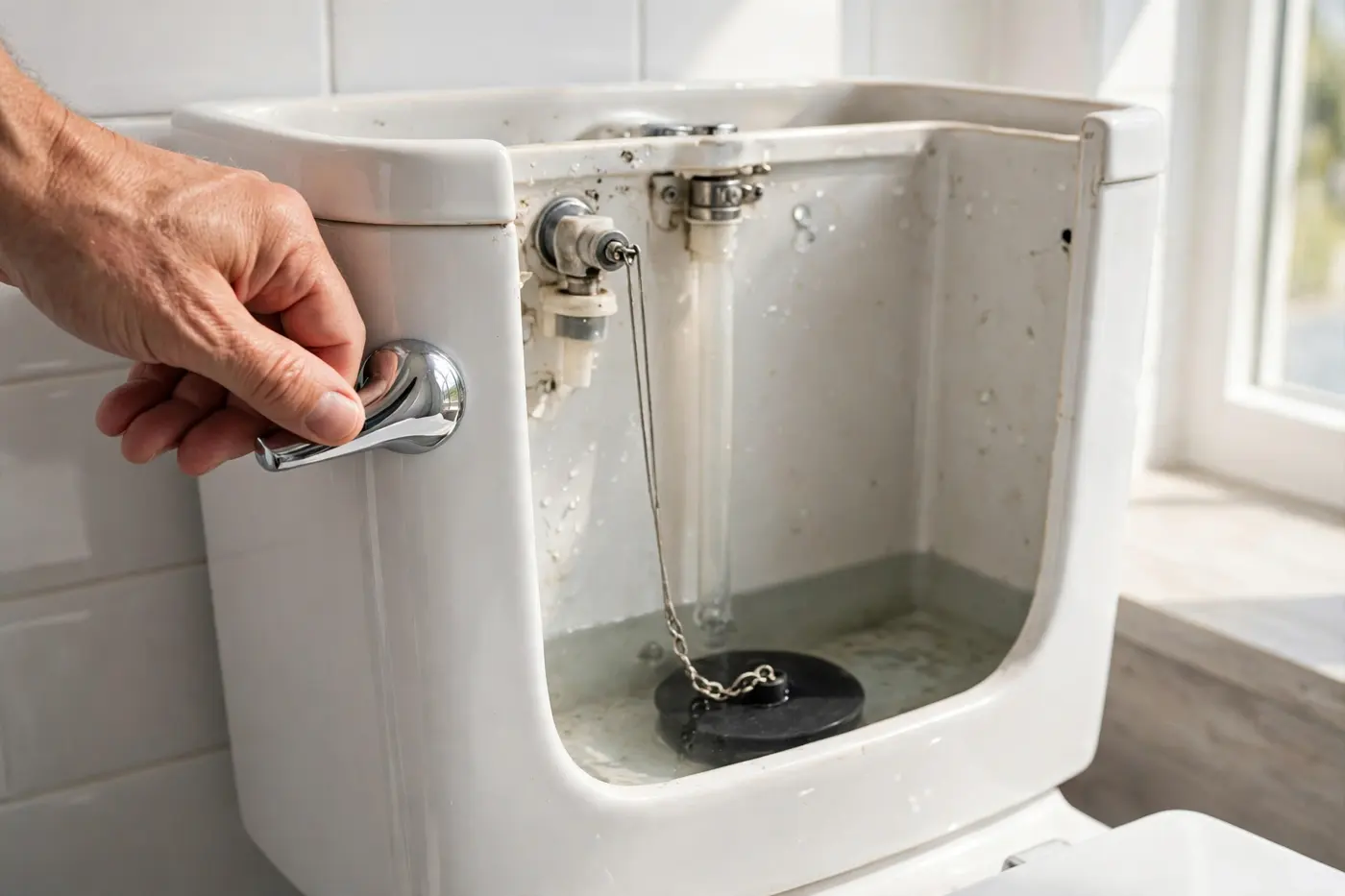
You press the handle. It moves, or maybe it feels loose. The bowl water stirs a little, then settles. Nothing clears. Your first thought is a clog, yet the bowl is not backing up, and water you pour in drains away without trouble. That pattern almost always means the fault sits in the tank, not the drain. A flush is a chain of events: handle lifts lever, lever pulls chain, chain lifts flapper, tank water rushes down, and the rush starts the bowl siphon. Break any link in that chain and the flush fails while the drain stays perfectly clear.
This guide covers the six causes we see most, in the order you should check them. Each check takes a minute or two with the tank lid off. Most homeowners find their cause in the first three checks. If you would rather have the parts handled for you, see our parts repair service and our fill and flush valve service.
First, prove the drain is clear
Fill a bucket with about two gallons of water. Pour it steadily into the bowl, not in one splash but in a firm, continuous stream. Watch closely. If the bowl swirls and empties with force, the trap and drain are clear. Your problem is in the tank, and the checks below will find it. If the bucket water rises and drains slowly, you do have a partial blockage, even if earlier flushes seemed to pass. In that case, treat the toilet as clogged and follow our clog guide instead.
The bucket test matters because tank work cannot fix a drain problem, and drain work cannot fix a tank problem. Two minutes with a bucket saves you from replacing parts that were never at fault. Do the test once, note the result, and then open the tank with confidence about which half of the toilet you are fixing.
Cause 1: Chain off, broken, or wrong length
Reconnect the chain with a little slack
Lift the tank lid and look where the metal or plastic lever arm meets the chain. The chain should hook to the lever at one end and to the flapper at the other. A chain that slipped off either hook leaves the handle moving nothing. A rusted chain can snap at a link. Reconnect or replace it, leaving about half an inch of slack when the flapper is closed. Too much slack lets the chain fall under the flapper and cause running. Too little holds the flapper up.
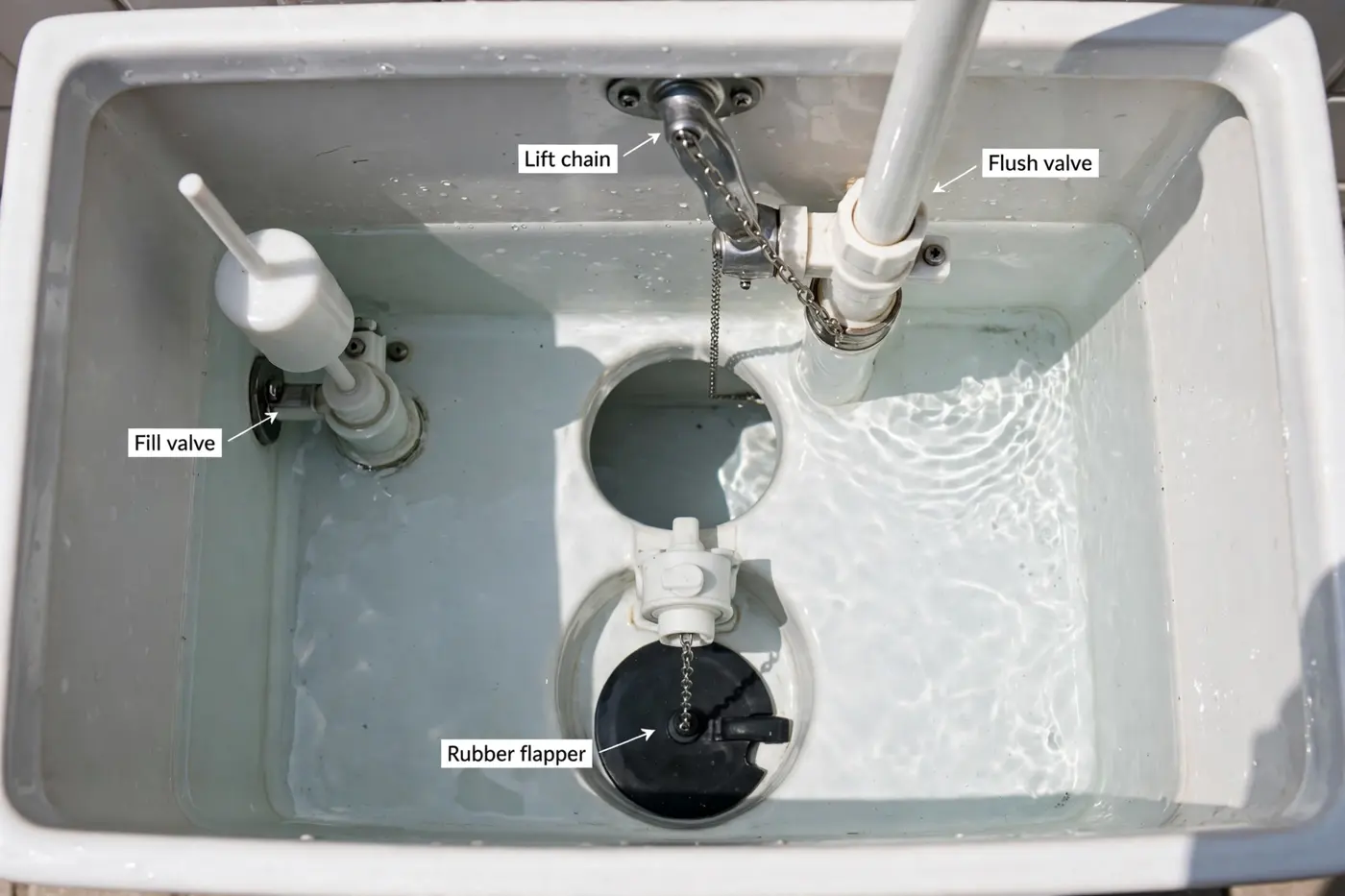
Test with the lid still off. Press the handle and watch the flapper rise fully, stay up while water rushes out, then fall and seal. If the chain kinks or twists, shorten it by one link or move the hook to another hole in the lever arm. Small changes here make a large difference to flush quality. Chain faults are the most common reason a toilet stops flushing overnight with no warning, and they are also the fastest to fix.
Cause 2: Flapper sinks too fast or will not lift
The flapper is a rubber cap that floats up when lifted, then settles back to seal the tank. Over time it absorbs water, hardens, or warps. A waterlogged flapper sinks within a second or two of lifting. The tank releases only part of its water, the bowl gets a weak swirl, and waste stays behind. People often describe this as needing to hold the handle down. Holding the handle simply keeps the flapper up by hand, which confirms the flapper itself is the fault.
Feel the flapper. If it feels heavy, stiff, slimy, or curled at the edges, replace it with one that matches your flush valve size. Fountain Valley hard water shortens flapper life, so a flapper that fails after a couple of years is common here. After fitting the new one, flush and watch. It should float for several seconds, then drop cleanly. End with a dye test if the toilet also ran before, to confirm the new seal holds. Full steps are in our flapper replacement guide.
Some newer toilets use a tall flush tower or canister instead of a flapper. The tower lifts to release water and drops to seal. Scale and worn seals can make it stick half-open or fail to lift. If your tank has a tower, check that it moves freely up and down and that its seal ring sits flat. A tower that sticks needs cleaning or seal replacement, work a technician can complete during a valve service visit.
Cause 3: Tank water level too low
Raise the fill level to the marked line
Look inside the tank for a water line mark, often stamped on the overflow tube or the tank wall. After a refill, the water should stop near that mark, about an inch below the top of the overflow tube. If the water stops well below the mark, each flush starts with too little water and too little force. Adjust the float: a screw on top of many fill valves, or a squeeze clip on the float cup. Raise it a little, flush, and check the level again.
Low level often follows other work. A past repair may have left the float set low. A sticky float can also stop early now and then, causing flushes that fail at random times. If the level will not stay where you set it, or refills stop at a different height each time, the fill valve is wearing out. Replacing a valve that cannot hold its setting ends both weak flushes and the running that often comes with the same fault.
Cause 4: Handle and lever faults
Check the handle nut and lever arm
Press the handle and watch the lever arm inside the tank. The arm should rise and fall with the handle in one firm motion. A loose handle wobbles and lifts the arm only partway. The nut that holds the handle sits inside the tank wall and often tightens in the reverse direction from normal nuts. Snug it by hand. A cracked lever arm or a handle with a worn square hole cannot lift fully and should be replaced as a unit.
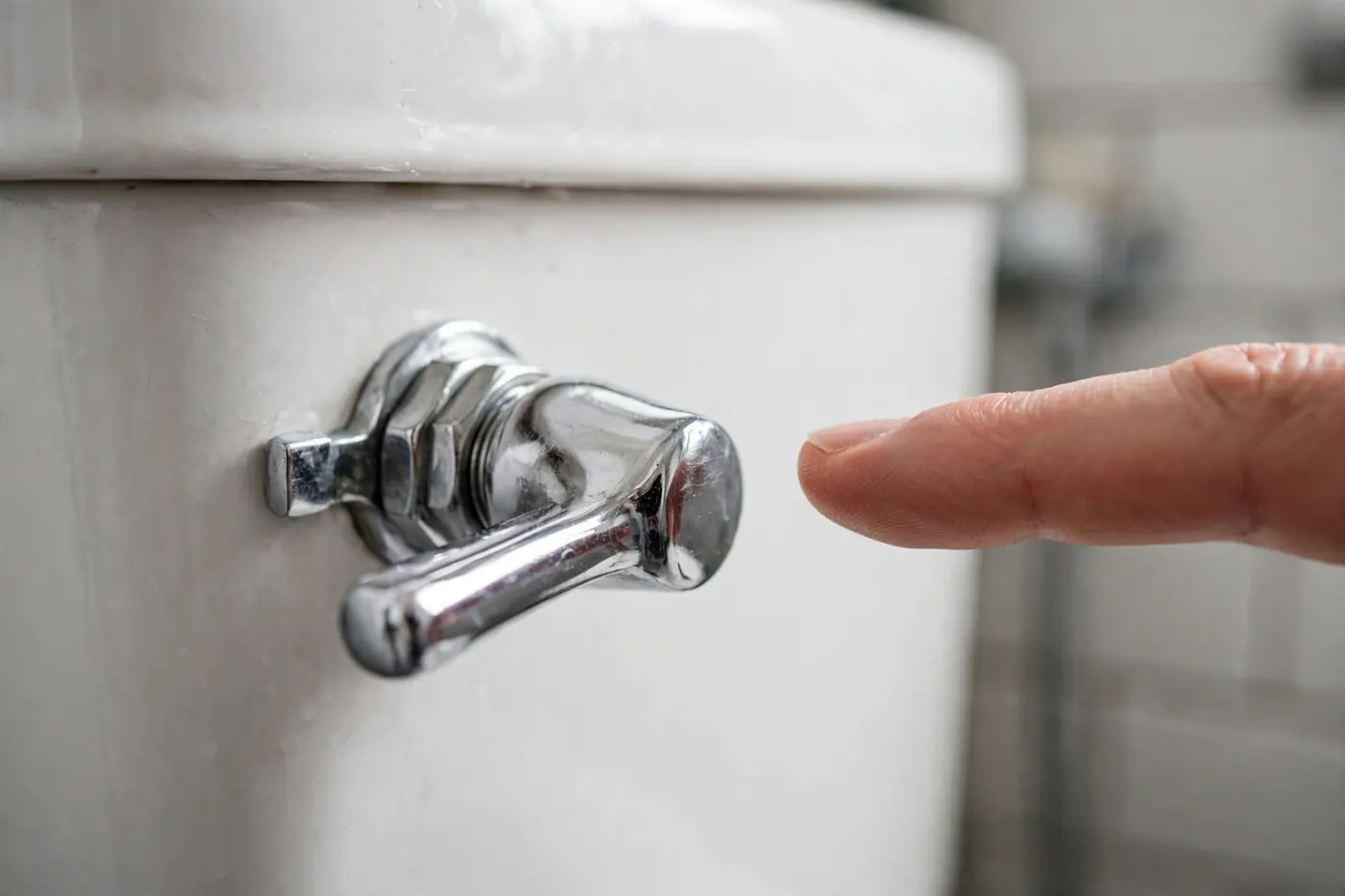
Handles also fail in a sticky way. Scale and corrosion at the handle shaft can make it drag, so the lever rises slowly and the flapper never gets a clean lift. Clean the shaft area, then test again. If the handle still drags or returns slowly, replacement is the sound fix. Handle and lever work sits within our parts repair service, and it is usually paired with a chain check so the whole lift path is sound when the lid goes back on.
Causes 5 and 6: Fill valve and flush tower faults
Cause five is a fill valve that fills slowly or not at all. If the tank stands empty or fills over many minutes, there is no water ready for a flush. Causes include grit in the valve, a kinked or failing supply line, or a wall valve that is partly closed or scaled shut. Confirm the wall valve is fully open. If supply is open and filling is still slow, the fill valve itself is the likely fault. Our supply line and valve page covers the wall side of this path.
Cause six is a flush valve problem below the flapper or tower. A cracked overflow tube, a loose flush valve, or a damaged seat can let water escape in ways that weaken or prevent a flush. Look for water moving in the bowl when the toilet sits unused, and listen for refills. Those signs plus a failed flush point below the surface parts. This level of repair involves draining the tank fully and reseating parts, and most homeowners hand it to a technician. The scope is confirmed with you before any work starts.
Do not overlook the rim jets
One more cause deserves a place on this list, even though it weakens a flush rather than stopping it fully. The rim jets under the bowl rim wash the bowl and help start the siphon spin. When Fountain Valley hard water narrows those jets with crust, the flush loses its swirl. Water drops straight down in a lazy pour, the bowl clears poorly, and the toilet seems as if it will not flush even though every tank part works. Feel under the rim with a gloved finger. Crusty, partly blocked openings confirm the cause.
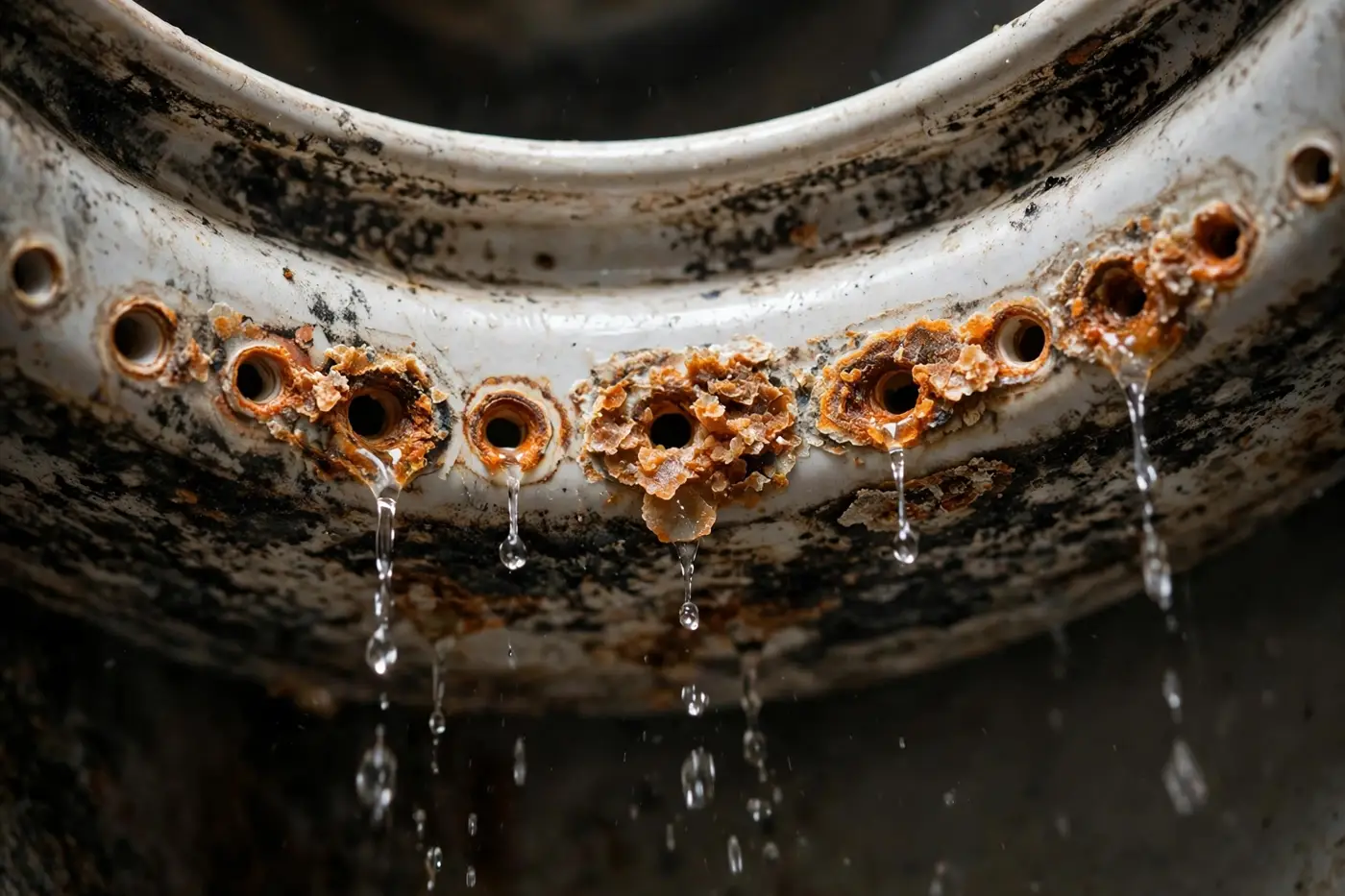
Gently clearing each jet with a small pick can restore much of the swirl. Work slowly so tools do not slip and chip the porcelain. If many jets are fully blocked and the large siphon jet at the front of the bowl is also crusted, home clearing may only partly help. A technician can judge whether jet clearing, tank parts, or both together will bring back a full flush, and that judgment keeps you from replacing sound parts while the true cause stays in the bowl.
Two toilets failing at once?
If two toilets in the home stop flushing on the same day, think supply, not parts. A partly closed home valve, recent plumbing work, or heavy scale in shared supply can starve both tanks. Check whether both tanks are empty or slow to fill. Share that detail when you call, since it changes where the technician starts.
Work through the causes in order and you will find most failed flushes within fifteen minutes. Chain, flapper, level, handle, valve: that order goes from fastest checks to deeper ones. If you finish the list with no fault found, or if any part is cracked, call Toilet Repair Pro during open hours. Check your area on our areas we serve page and call when ready.
Frequently asked questions
Why does my toilet handle go down but nothing flushes?
The chain has likely come off the flush lever or the flapper, or the chain broke. Pressing the handle moves the lever, but nothing lifts the flapper, so tank water stays in the tank. Lift the lid and look at the chain connection first. Reconnecting or replacing the chain restores the flush.
Can low tank water make a toilet fail to flush without a clog?
Yes. A flush needs a full tank of water released at once to start the siphon. If the fill valve stops early or the float is set low, the tank holds too little water and the bowl only swirls weakly. Raising the fill level to the marked line often restores a full flush.
How do I test whether my non-clogged toilet drain is really clear?
Pour a bucket of water steadily into the bowl. If the bowl drains with a strong swirl, the drain path is clear and the fault sits in the tank parts. If the bucket water rises and drains slowly, there is a partial blockage after all, and it should be checked as a clog.
Why does my toilet flush only if I hold the handle down?
Holding the handle keeps the flapper up longer. Needing to hold it usually means the flapper is waterlogged and sinks too fast, the chain is too short, or the flapper is the wrong weight for the valve. A fresh flapper with correct chain slack normally ends the need to hold the handle.
When should a toilet that will not flush be checked by a technician?
Call if the chain and water level look right yet the flush still fails, if the handle or lever is cracked, if a flush tower does not lift or seal, or if two toilets in the home fail at once. Those signs point to worn valve parts or a supply problem that needs hands-on testing.
Also read
Read next our guide on a toilet tank that will not fill and our guide to replacing a toilet flapper. For service, see toilet parts repair and browse all areas we serve.